 Image 1 of 6
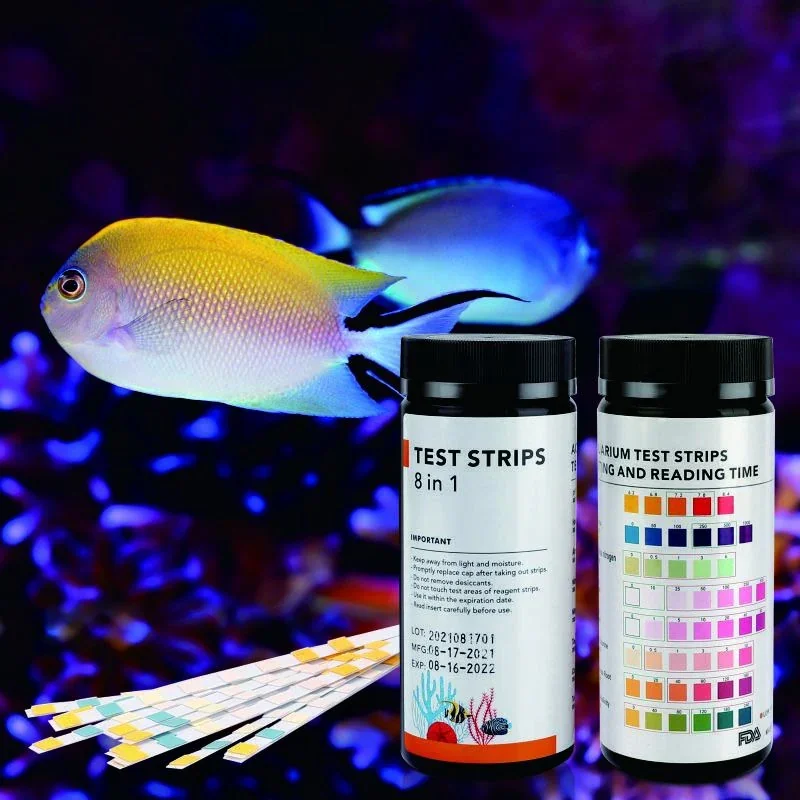 Image 2 of 6
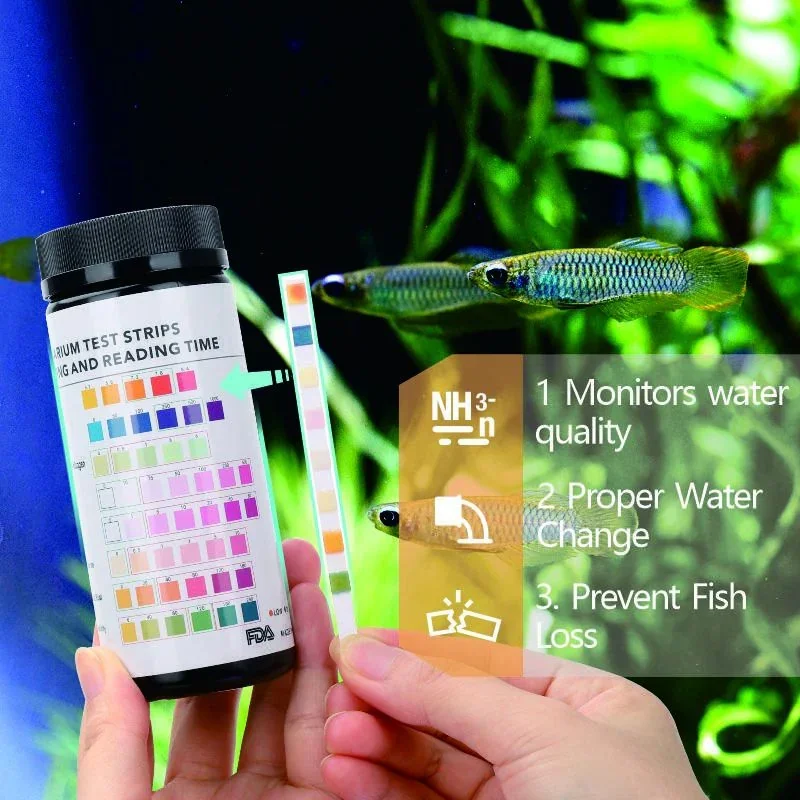 Image 3 of 6
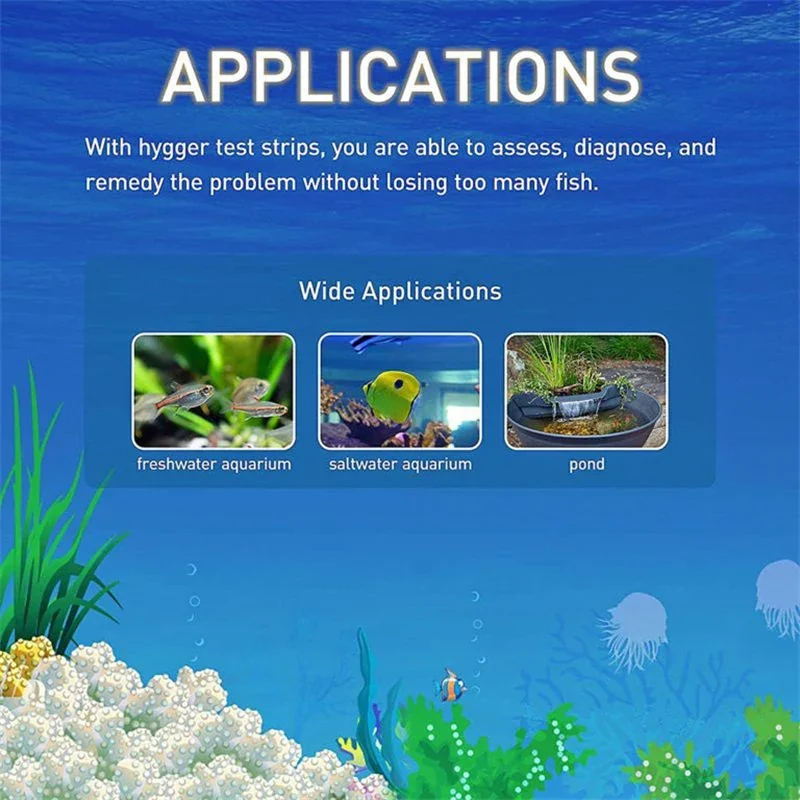 Image 4 of 6
 Image 5 of 6
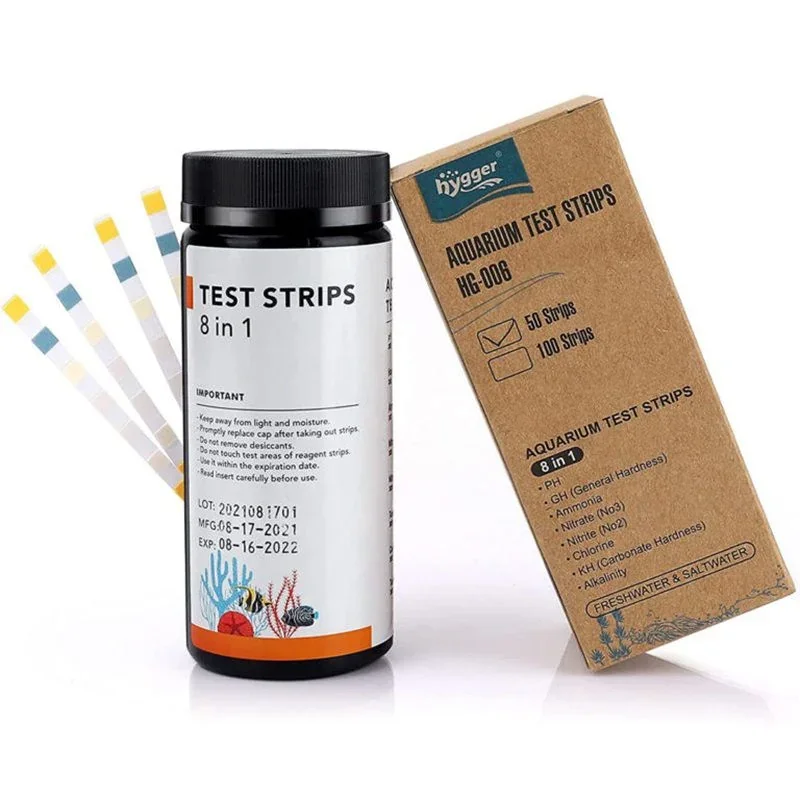 Image 6 of 6
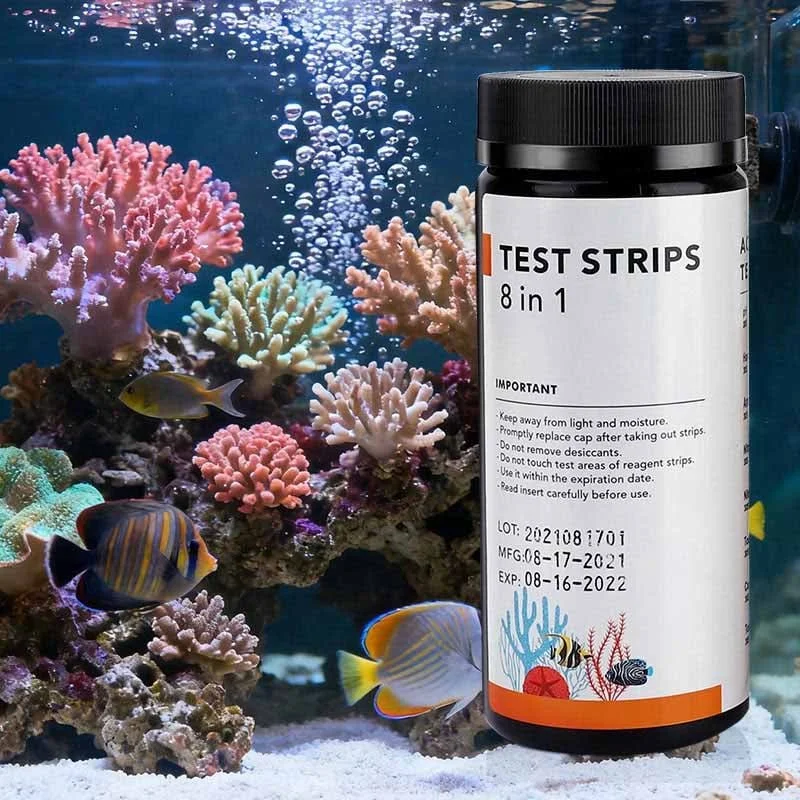
Hygger 8-in-1 Aquarium Test Strips HG006
Order processing time: 3–5 business days
Keep your aquarium water conditions under control with the Hygger 8-in-1 Aquarium Test Strips HG006, a convenient water quality testing kit designed for freshwater aquariums, saltwater fish tanks, reef systems, ponds, and other aquatic environments. Featuring eight essential water quality tests on a single strip, the Hygger HG006 makes it easier to monitor aquarium conditions, identify potential water chemistry problems, and maintain a healthier environment for fish and aquatic life.
Available in 50-strip and 100-strip bottles, the Hygger HG006 provides a fast, simple, and affordable alternative to testing multiple water parameters individually. Each strip contains specially formulated reagent pads that change color when exposed to aquarium water. Simply dip the strip into the water for approximately 2 seconds, wait 30 seconds, and compare the results with the color chart on the bottle.
The HG006 measures ammonia nitrogen, nitrite, nitrate, pH, general hardness, carbonate hardness, total alkalinity, and total chlorine, helping aquarium owners monitor some of the most important aspects of water quality in one convenient test.
Whether you're cycling a new aquarium, monitoring an established fish tank, preparing for a water change, or checking pond water conditions, the Hygger HG006 provides a practical solution for routine aquarium water testing.
Benefits of the Hygger 8-in-1 Aquarium Test Strips HG006
8-in-1 Water Quality Testing: Measures eight important aquarium water parameters using a single test strip.
Ammonia Monitoring: Helps identify potentially harmful ammonia nitrogen levels.
Nitrite Detection: Monitors nitrite concentrations associated with aquarium nitrogen cycling.
Nitrate Testing: Helps track nitrate accumulation between water changes.
pH Measurement: Provides an indication of aquarium water acidity or alkalinity.
General Hardness Testing: Helps assess dissolved calcium and magnesium hardness.
Carbonate Hardness Monitoring: Measures carbonate hardness associated with pH stability.
Total Alkalinity Testing: Provides additional information about the water's acid-neutralizing capacity.
Total Chlorine Detection: Helps identify chlorine that may be harmful to aquarium inhabitants.
Fast 30-Second Results: Provides convenient color-based readings without lengthy testing procedures.
Easy Dip-and-Read Operation: No complicated equipment or liquid reagent mixing required.
Freshwater and Saltwater Compatibility: Suitable for multiple aquarium environments.
Pond Water Testing: Useful for routine monitoring of outdoor and indoor pond systems.
50-Strip and 100-Strip Options: Choose the quantity that suits your testing frequency.
Convenient Storage Bottle: Includes moisture protection to help preserve unused test strips.
Eight Essential Aquarium Water Parameters
The Hygger HG006 is designed to measure eight water quality parameters that help aquarium owners understand the condition of their aquarium water.
Each parameter provides useful information about water chemistry and potential changes that may affect aquatic life.
1. Ammonia Nitrogen
Ammonia is produced when fish release waste and when uneaten food, decaying plants, and other organic materials break down.
Ammonia nitrogen is particularly important to monitor in newly established aquariums and heavily stocked fish tanks.
Elevated ammonia can be dangerous to fish and other aquatic animals.
The HG006 includes an ammonia nitrogen test pad to help aquarium owners detect changes in ammonia levels.
Why Ammonia Testing Matters
Ammonia monitoring is useful when:
Cycling a new aquarium
Adding new fish
Increasing aquarium stocking levels
Investigating unusual fish behavior
Checking filtration performance
Responding to overfeeding
Monitoring aquariums after filter maintenance
Important: The toxicity of ammonia depends partly on pH and temperature. Test-strip readings should be interpreted carefully, and concerning results should be confirmed with a suitable liquid test kit when necessary.
2. Nitrite (NO₂)
Nitrite is an intermediate compound produced during the aquarium nitrogen cycle.
Beneficial bacteria convert ammonia into nitrite, and other bacteria convert nitrite into nitrate.
Elevated nitrite can interfere with normal oxygen transport in fish.
Benefits of Nitrite Testing
Monitoring nitrite helps aquarium owners:
Track aquarium cycling progress
Identify incomplete biological filtration
Detect potential water quality problems
Monitor changes after adding livestock
Check conditions following major aquarium maintenance
For most established freshwater fish aquariums, nitrite should remain undetectable using an appropriate aquarium test.
3. Nitrate (NO₃)
Nitrate is produced as the final major product of the aquarium nitrogen cycle.
Although generally less immediately toxic than ammonia and nitrite, excessive nitrate accumulation may contribute to poor water conditions and stress in some aquatic animals.
Nitrate is also a nutrient that can contribute to algae growth.
Why Monitor Nitrate?
Regular nitrate testing helps users:
Determine when water changes may be needed
Monitor waste accumulation
Evaluate feeding and stocking levels
Track aquarium maintenance effectiveness
Manage planted aquarium nutrient conditions
Acceptable nitrate levels vary by aquarium type and livestock.
Reef aquariums, planted freshwater tanks, and fish-only systems may have different nitrate management goals.
4. pH Level
The pH value indicates whether aquarium water is acidic, neutral, or alkaline.
Different aquatic species thrive under different pH conditions.
Some freshwater fish prefer slightly acidic water, while many marine species require alkaline conditions.
Benefits of pH Testing
The HG006 helps aquarium owners:
Monitor pH changes
Check water before adding fish
Compare tap water and aquarium water
Observe changes after water treatments
Monitor conditions in planted aquariums
Support appropriate water chemistry for livestock
Stable pH is often more important than attempting to achieve a specific value without considering the needs of the aquarium's inhabitants.
5. General Hardness (GH)
General hardness measures the concentration of certain dissolved minerals, primarily calcium and magnesium.
GH influences the mineral composition of aquarium water.
Different fish, shrimp, and aquatic plants have different mineral requirements.
Why GH Matters
General hardness monitoring is useful for:
Freshwater community aquariums
Shrimp tanks
Livebearer aquariums
Soft-water fish setups
Planted aquariums
Preparing remineralized water
Hygger may label this parameter simply as Hardness on the bottle.
6. Carbonate Hardness (KH)
Carbonate hardness measures the water's buffering capacity associated primarily with carbonate and bicarbonate ions.
KH plays an important role in resisting sudden pH changes.
Aquariums with insufficient buffering may experience unstable pH under certain conditions.
Benefits of KH Testing
Carbonate hardness testing helps users:
Monitor pH buffering
Manage freshwater aquarium chemistry
Evaluate prepared aquarium water
Support stable water conditions
Monitor changes after water adjustments
Hygger may label this parameter as Carbonate Root on some packaging.
The manufacturer confirms that this corresponds to KH.
7. Total Alkalinity
Total alkalinity describes the water's overall ability to neutralize acids.
It is closely related to carbonate hardness in many aquarium environments, but the two measurements are not always identical.
Why Total Alkalinity Matters
Testing alkalinity can help aquarium owners:
Understand water buffering capacity
Monitor water chemistry stability
Evaluate aquarium water treatments
Track changes in source water
Support consistent aquarium maintenance
The HG006 includes a separate total alkalinity test in addition to its carbonate hardness measurement.
8. Total Chlorine
Chlorine and related disinfectants may be present in municipal water supplies.
These substances can be harmful to fish and beneficial aquarium bacteria.
Benefits of Chlorine Testing
The chlorine test helps aquarium owners:
Check source water
Monitor water treatment effectiveness
Identify potentially unsafe water
Verify conditions before water changes
Investigate unexpected water quality problems
Important: Always use an appropriate aquarium water conditioner when preparing chlorinated or chloraminated tap water. A low or undetectable chlorine reading alone does not guarantee that all potentially harmful substances have been removed.
Fast Results in Approximately 30 Seconds
The Hygger HG006 is designed for quick and convenient water testing.
Unlike traditional liquid reagent kits that may require several separate bottles, measuring tubes, and multiple waiting periods, the HG006 allows users to check eight parameters with one strip.
Simple Three-Step Testing
Step 1: Dip
Immerse the test strip in aquarium water for approximately 2 seconds.
Step 2: Wait
Remove the strip and wait approximately 30 seconds for the reagent pads to develop their colors.
Step 3: Compare
Hold the strip beside the color comparison chart and match each pad to the closest corresponding color.
This straightforward process makes the HG006 suitable for both new and experienced aquarium hobbyists.
Easy Color-Chart Reading
The HG006 uses color-changing reagent pads to indicate water quality conditions.
Each pad corresponds to a specific parameter.
When the strip is exposed to aquarium water, the reagent pads react and develop different colors according to the substances being measured.
How to Interpret Results
Compare each pad with its corresponding color scale on the bottle.
Select the closest matching color to estimate the parameter level.
For best results:
Read the chart under bright, neutral lighting.
Avoid colored aquarium lighting when comparing results.
Hold the strip horizontally.
Compare each pad with the correct parameter scale.
Read the strip at the time specified by Hygger.
Do not interpret color changes long after the recommended reading window.
Important: Test strips provide approximate, semi-quantitative results. For high-stakes decisions or unexpected readings, confirm results with a more precise testing method.
Convenient Aquarium Nitrogen Cycle Monitoring
The Hygger HG006 is particularly useful for tracking important changes during aquarium cycling.
A new aquarium must establish beneficial bacteria capable of processing waste compounds.
During the nitrogen cycle, ammonia is converted to nitrite and then nitrate.
Monitoring a New Aquarium
The HG006 allows aquarium owners to check ammonia, nitrite, and nitrate during the cycling process.
These readings can help show whether biological filtration is developing.
Monitoring an Established Aquarium
In an established aquarium, unexpected ammonia or nitrite readings may indicate a problem with biological filtration or waste management.
After Adding New Fish
Adding livestock increases the amount of waste produced.
Testing can help identify whether the filtration system is keeping up with the additional biological load.
After Filter Maintenance
Water testing is useful after major filter cleaning, filter replacement, or other changes that may affect beneficial bacteria.
Important: A single set of readings does not establish that an aquarium is fully cycled. Cycling should be confirmed through an appropriate testing process over time.
Suitable for Freshwater and Saltwater Aquariums
The Hygger HG006 is marketed for both freshwater and saltwater use.
Freshwater Aquariums
Useful for monitoring:
Tropical community tanks
Betta aquariums
Goldfish aquariums
Cichlid tanks
Shrimp aquariums
Planted aquariums
Freshwater breeding systems
Saltwater Aquariums
The strips can provide general screening information for marine aquarium water.
However, saltwater aquariums often require additional specialized testing.
For example, reef systems may need dedicated tests for calcium, magnesium, phosphate, and alkalinity at a level of precision appropriate for coral care.
Pond Water Testing
The HG006 is also suitable for general pond water monitoring.
This can be useful for ornamental ponds, koi ponds, and other aquatic environments.
Available in 50-Strip and 100-Strip Bottles
The Hygger HG006 is available in two convenient quantities.
50-Strip Bottle
The 50-strip version is ideal for:
Small aquarium collections
Routine water testing
New aquarium owners
Occasional water quality monitoring
Hobbyists who prefer a smaller supply
100-Strip Bottle
The 100-strip version is suitable for:
Multiple aquariums
Frequent water testing
Aquarium cycling
Fish breeding systems
Regular pond monitoring
Aquarium maintenance professionals
Both options provide the same 8-in-1 testing functionality.
Choose the bottle size according to how frequently you expect to test.
Moisture-Protected Storage Bottle
The Hygger HG006 comes in a resealable bottle designed to help protect the unused strips.
The bottle includes a moisture-control packet to reduce exposure to humidity.
Why Proper Storage Matters
Test-strip reagent pads can deteriorate when exposed to moisture, heat, or improper storage conditions.
This may affect color development and reduce the reliability of results.
Storage Recommendations
Keep the bottle tightly sealed.
Store in a cool, dry location.
Keep away from direct sunlight.
Avoid storing near aquarium splashes.
Leave the moisture-control packet inside the bottle.
Do not touch unused reagent pads.
Use strips before their expiration date.
Remove only the strip needed for immediate testing.
Proper storage helps maintain test-strip performance.
Ideal for Routine Aquarium Maintenance
The Hygger HG006 is a practical addition to an aquarium maintenance routine.
Water quality can change gradually without obvious visible signs.
Clear water does not necessarily mean that ammonia, nitrite, nitrate, or other parameters are within suitable ranges.
When to Test Aquarium Water
Testing may be useful:
During aquarium cycling
Before introducing new fish
After adding livestock
Before or after water changes
After major filter maintenance
When fish behave unusually
Following accidental overfeeding
After medication or treatment
When algae problems develop
When checking new water sources
During seasonal pond maintenance
Testing frequency should be based on aquarium maturity, stocking levels, livestock sensitivity, and any current water quality concerns.
Suitable Aquarium Applications
The Hygger 8-in-1 Aquarium Test Strips HG006 are suitable for:
Freshwater tropical aquariums
Saltwater fish tanks
Reef aquariums for general screening
Planted aquariums
Betta fish tanks
Goldfish aquariums
Cichlid aquariums
Shrimp aquariums
Nano aquariums
Community fish tanks
Fish breeding aquariums
Quarantine aquariums
Ornamental ponds
Koi ponds
New aquarium cycling
Routine water quality monitoring
Tap water screening
Aquarium water change preparation
For sensitive species or specialized reef systems, additional precision testing may be necessary.
How to Use the Hygger HG006 Test Strips
Prepare the testing area: Choose a clean, dry location with good lighting.
Collect a water sample: Use a clean container to collect aquarium water, or test directly in the aquarium according to the supplied instructions.
Open the bottle: Remove one test strip without touching the reagent pads.
Close the bottle immediately: Protect the remaining strips from humidity.
Dip the strip: Immerse the reagent pads in the water for approximately 2 seconds.
Remove the strip: Take the strip out of the water promptly.
Hold horizontally: Keep the strip level to reduce color bleeding between adjacent pads.
Remove excess water gently: Tap or shake lightly if necessary.
Wait approximately 30 seconds: Allow the reagent pads to develop their colors.
Compare with the chart: Match each test pad to its corresponding color scale.
Record the results: Keep a water testing log to monitor trends.
Discard the used strip: Do not reuse test strips.
Important Testing Notes
Do not read results after an extended period.
Hygger states that color changes appearing approximately two minutes after testing should not be considered meaningful.
Use the reading time specified on the product packaging.
Tips for More Reliable Water Testing
Avoid Touching the Test Pads
Oils, moisture, and contaminants from fingers may interfere with the chemical reactions.
Handle the strip by its uncoated end.
Keep Strips Dry Before Use
Do not remove a strip until you are ready to test.
Use Proper Lighting
Natural or neutral white lighting makes color comparisons easier.
Follow the Timing Instructions
Leaving the strip in water too long or waiting too long to read the results may affect accuracy.
Check the Expiration Date
Expired strips may produce unreliable readings.
Confirm Unexpected Results
If a strip indicates dangerous ammonia, nitrite, or chlorine levels, verify the reading promptly with an appropriate additional test while taking sensible precautions to protect livestock.
Understanding Test Strip Limitations
The Hygger HG006 is designed for convenient screening and routine monitoring.
However, color-based test strips have limitations.
Approximate Results
The color chart provides an estimated concentration rather than a laboratory-grade measurement.
Lighting Differences
Color appearance can vary under different lighting conditions.
Water Chemistry Interference
Certain aquarium additives, treatments, or unusual water conditions may affect test results.
Limited Reef-Specific Testing
The HG006 does not replace dedicated calcium, magnesium, or phosphate testing for reef aquarium management.
Additional Monitoring May Be Necessary
For specialized aquariums, more precise tests may be required.
The HG006 is best used as a convenient part of a broader aquarium water quality monitoring routine.
Product Specifications
Brand: Hygger
Product Name: 8-in-1 Aquarium Test Strips
Model: HG006 / HG-006
Product Type: Aquarium Water Quality Test Kit
Testing Method: Colorimetric Reagent Test Strips
Number of Parameters Tested: 8
Test Parameter 1: Ammonia Nitrogen
Test Parameter 2: Nitrite (NO₂)
Test Parameter 3: Nitrate (NO₃)
Test Parameter 4: pH
Test Parameter 5: General Hardness (GH)
Test Parameter 6: Carbonate Hardness (KH)
Test Parameter 7: Total Alkalinity
Test Parameter 8: Total Chlorine
Available Quantities: 50 Strips or 100 Strips
Dip Time: Approximately 2 Seconds
Result Reading Time: Approximately 30 Seconds
Result Interpretation: Color Comparison Chart
Testing Type: Qualitative and Semi-Quantitative
Water Compatibility: Freshwater and Saltwater
Additional Applications: Pond Water Testing
Power Required: None
Batteries Required: None
Storage: Resealable Bottle with Moisture-Control Packet
50-Strip Package Dimensions: Approximately 5.2 × 2.17 × 2.13 Inches
50-Strip Package Weight: Approximately 2.4 oz / 68 g
100-Strip Package Dimensions: Approximately 5.16 × 2.28 × 2.17 Inches
100-Strip Package Weight: Approximately 2.89 oz / 82 g
Recommended Sample Temperature: Approximately 2°C–30°C
Recommended Testing Humidity: Up to 80% Relative Humidity
Primary Applications: Aquarium Water Testing, Nitrogen Cycle Monitoring, Water Chemistry Screening, and Pond Maintenance
Specifications are based on Hygger's published HG006 product information and user manual. Some labels may use “Hardness” for GH and “Carbonate Root” for KH. Results are approximate and should be interpreted using the chart supplied with the specific bottle.
Package Includes
50-Strip Option
1 × Bottle Containing 50 Hygger 8-in-1 Aquarium Test Strips
1 × Color Comparison Chart on Bottle
1 × Moisture-Control Packet Inside Bottle
100-Strip Option
1 × Bottle Containing 100 Hygger 8-in-1 Aquarium Test Strips
1 × Color Comparison Chart on Bottle
1 × Moisture-Control Packet Inside Bottle
The bottle provides the instructions and color reference needed for routine testing.
Simple, Convenient Aquarium Water Quality Monitoring
The Hygger 8-in-1 Aquarium Test Strips HG006 are an excellent choice for aquarium owners who want a quick and convenient way to monitor essential water quality parameters.
By combining ammonia, nitrite, nitrate, pH, general hardness, carbonate hardness, alkalinity, and chlorine testing into one strip, the HG006 makes it easier to identify water chemistry changes and maintain a consistent aquarium care routine.
Its simple 2-second dip process, approximately 30-second reading time, and easy-to-follow color chart provide accessible water testing for both beginners and experienced aquarium hobbyists.
Available in 50-strip and 100-strip bottles, the Hygger HG006 is suitable for routine monitoring of freshwater aquariums, saltwater fish tanks, and ornamental ponds.
Whether you're cycling a new aquarium, maintaining an established fish tank, or checking water conditions before adding new livestock, these versatile test strips offer a practical and economical water testing solution.
Order the Hygger 8-in-1 Aquarium Test Strips HG006 today and make aquarium water quality monitoring faster, simpler, and more convenient.