

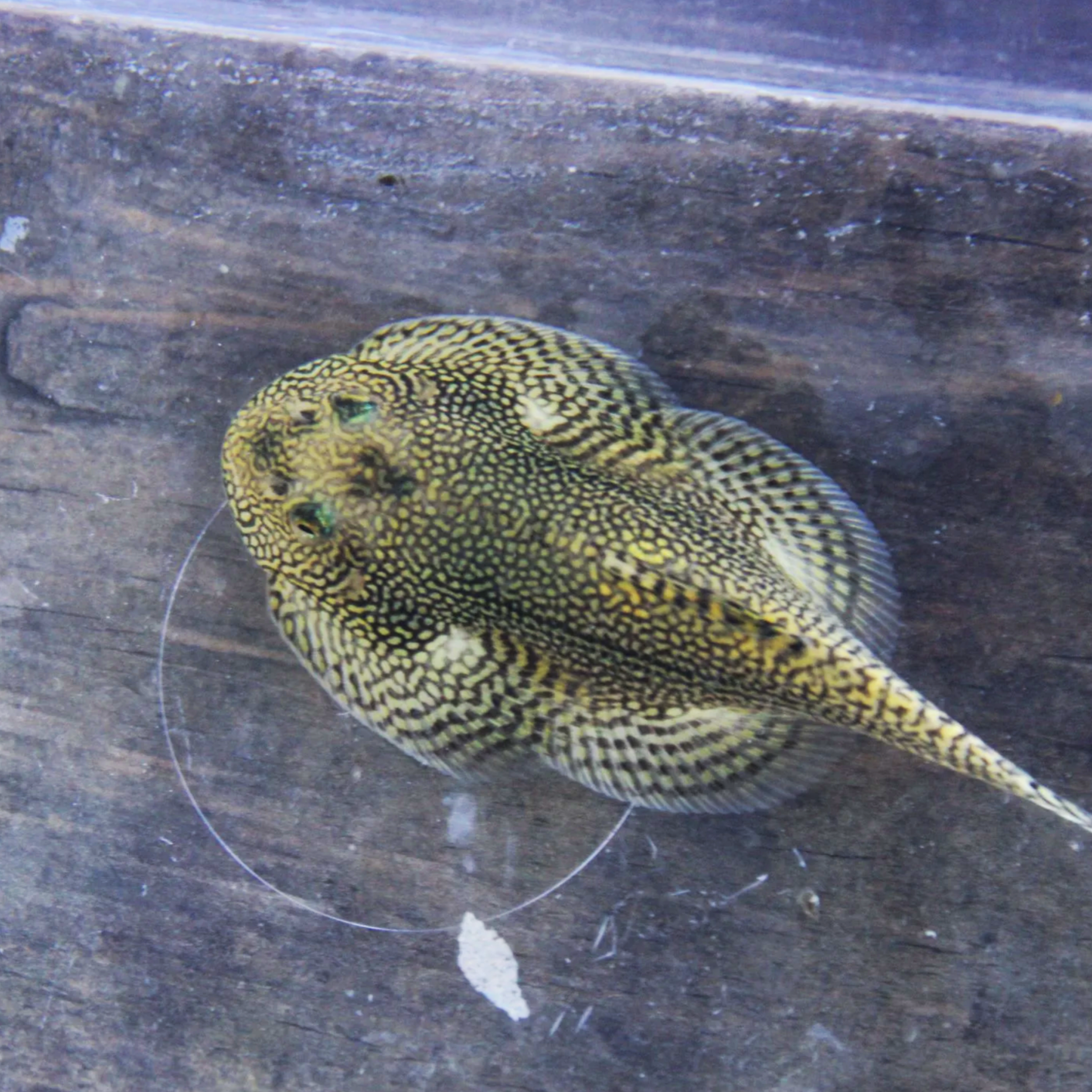
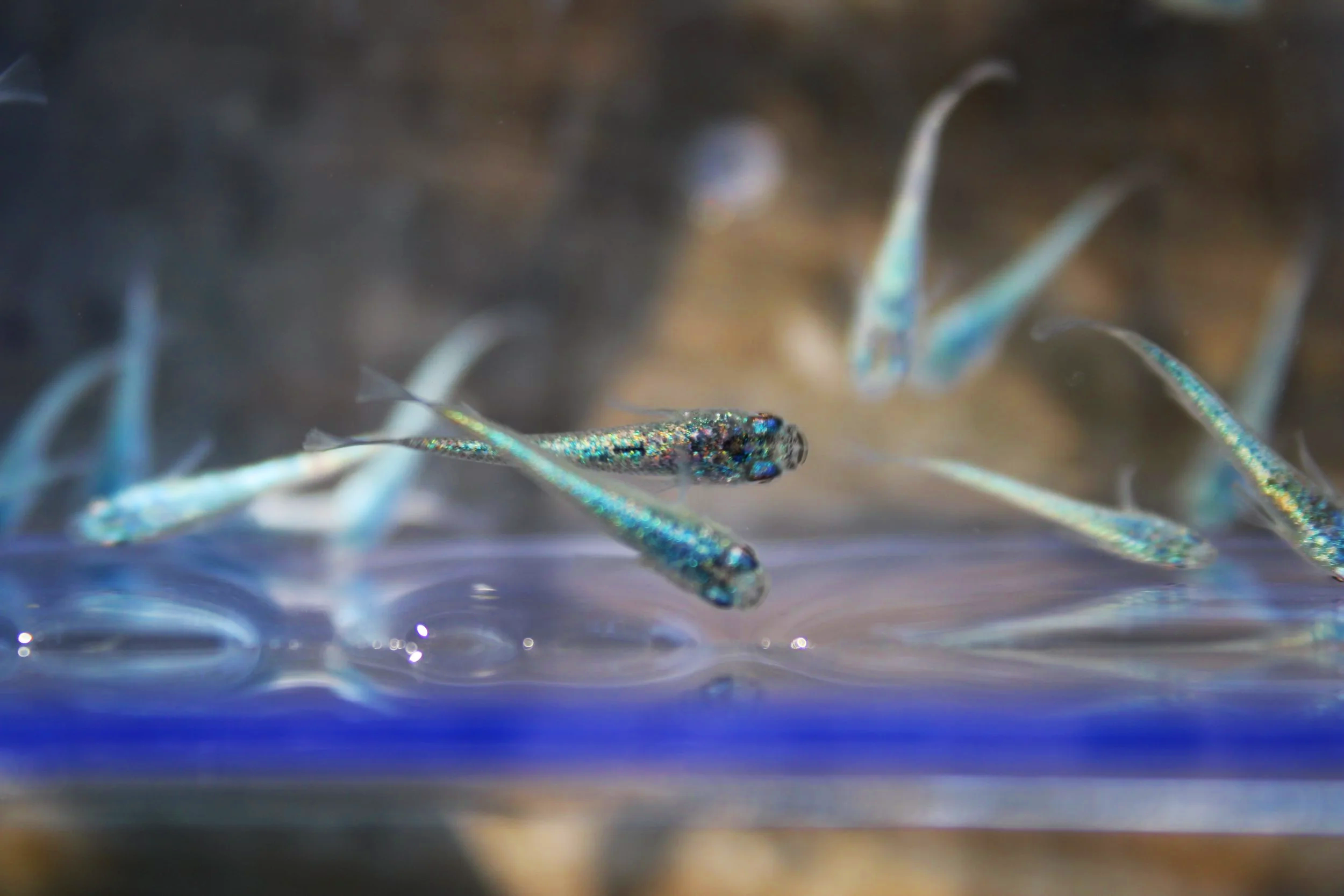
1.5-2 Inch SEW01/SEW01r Spotted Hillstream Loach (Sewellia sp. Spotted”Yellow Pearl)
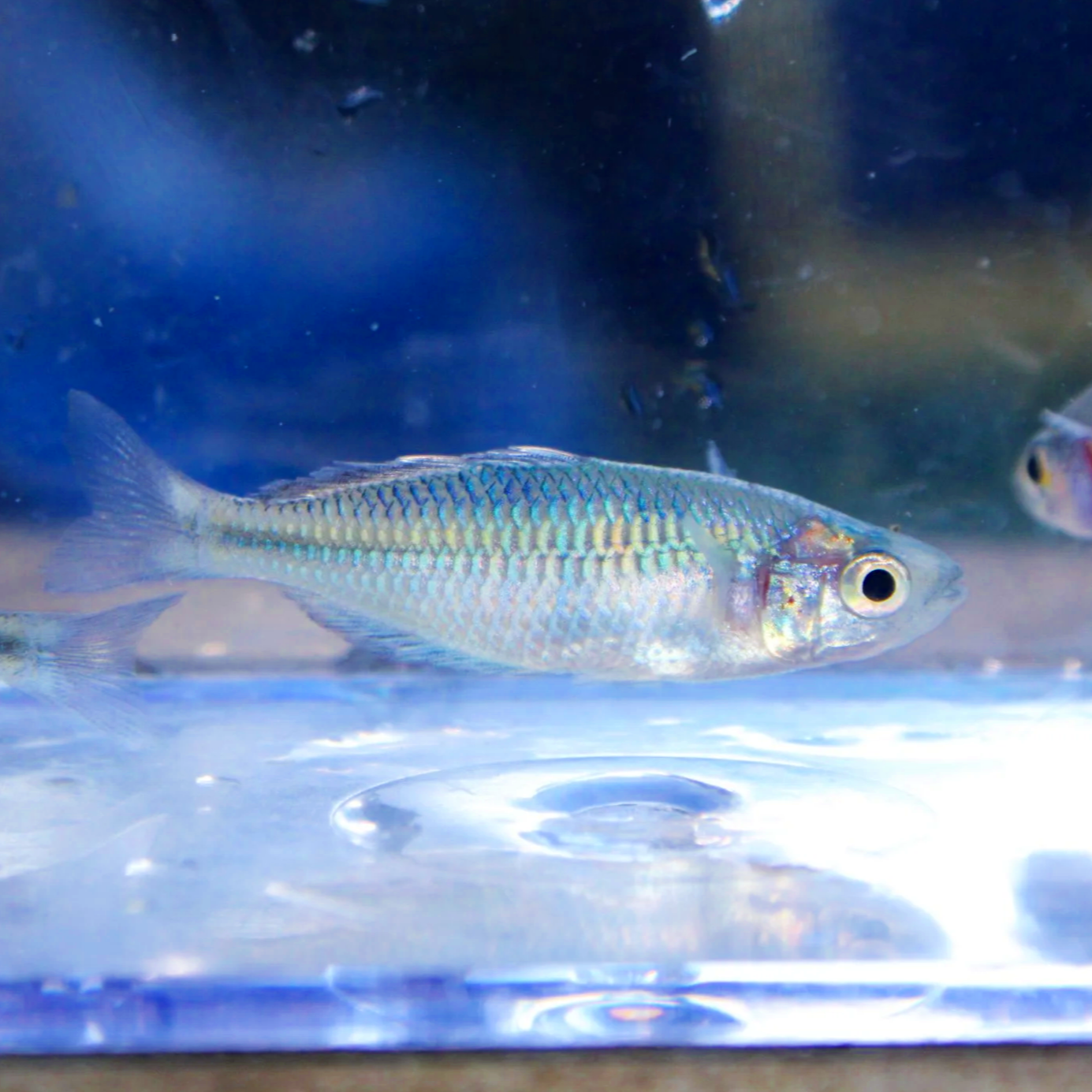
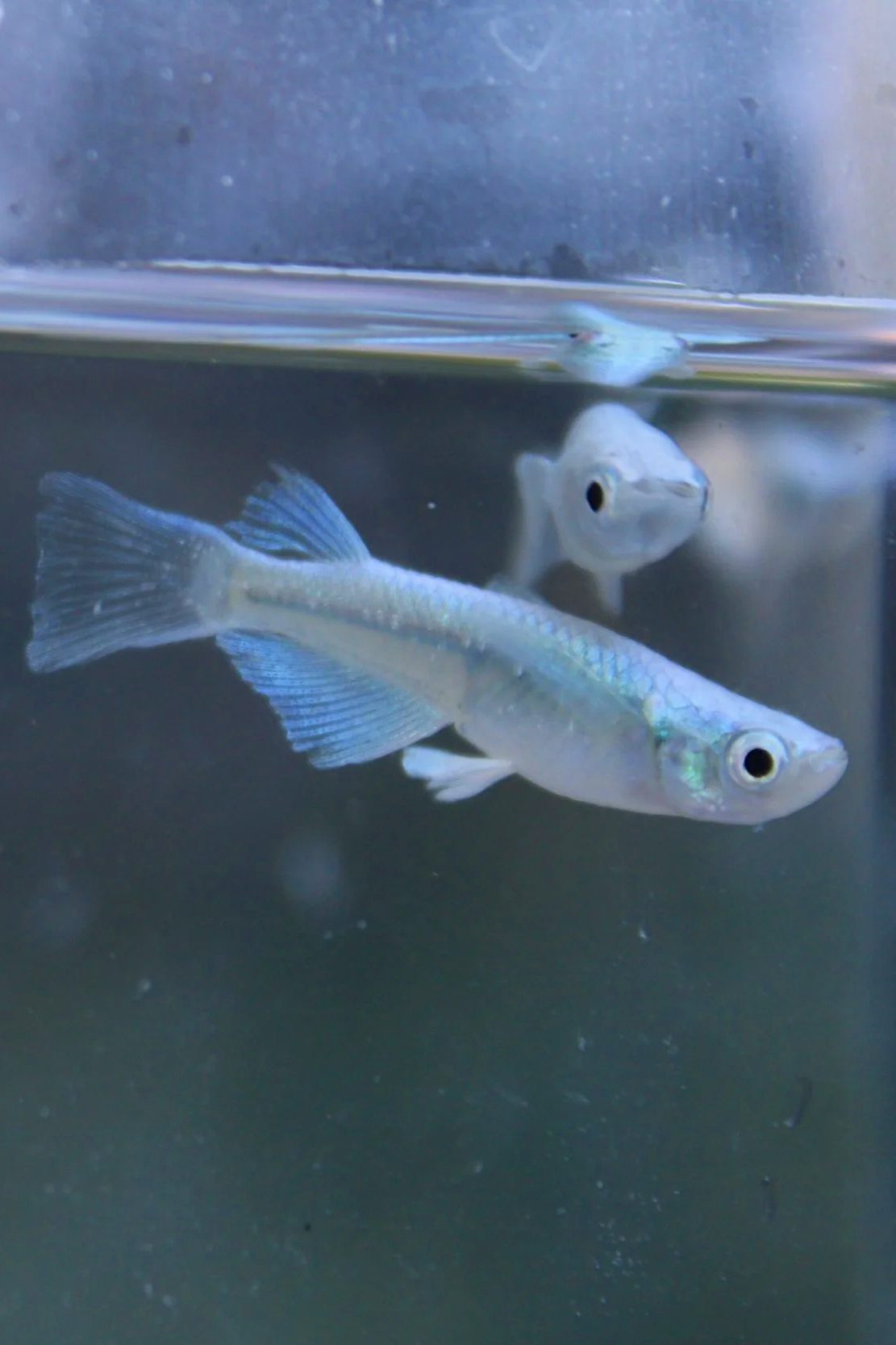
Shop Our Best Selling Fish!
Shop Our Selection Of Live Plants!
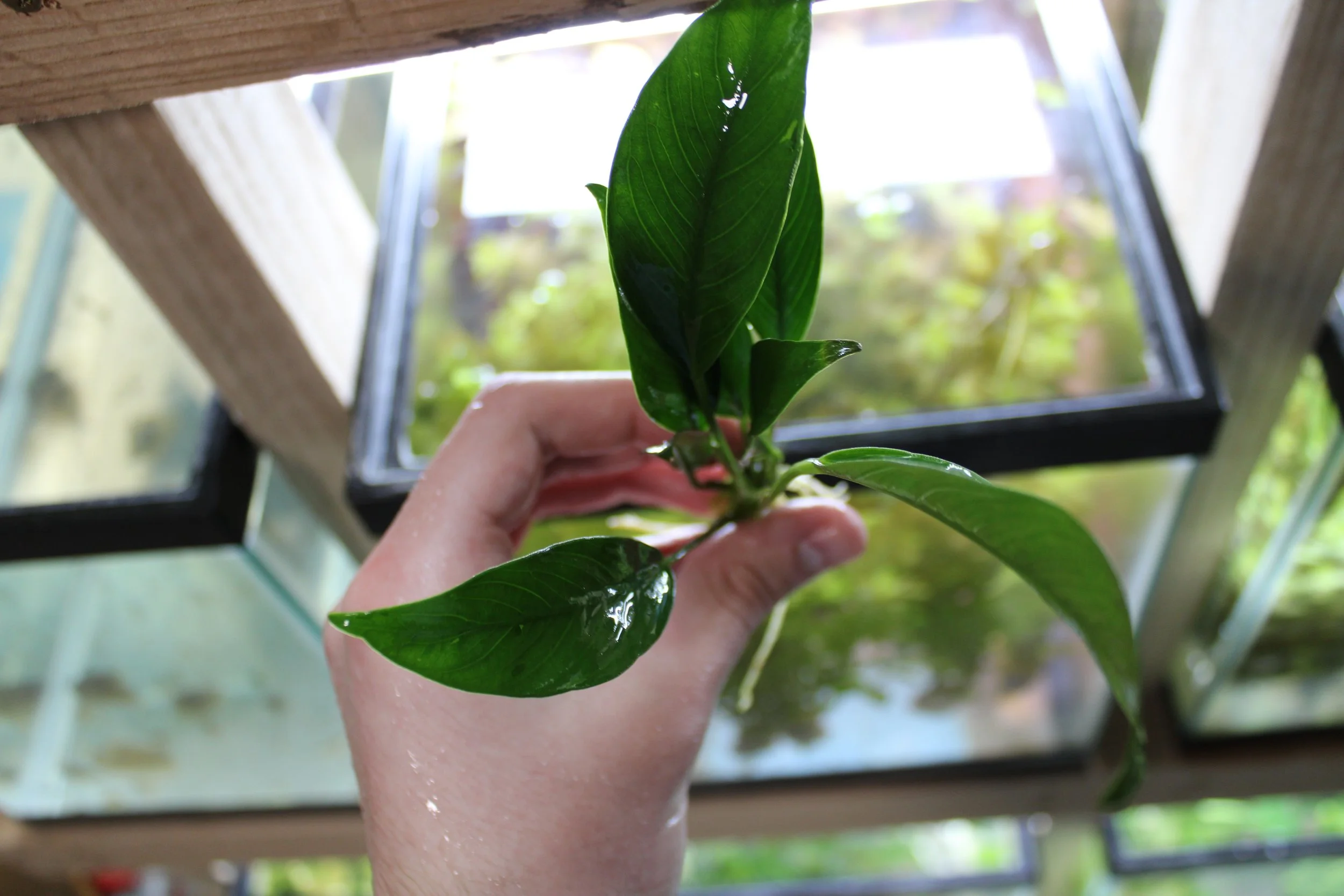
Plants are pest free! Some plants we sell are grown emersed which means out of water when they are stuck back in aquariums, they may experience some melting (Leaves Dying) this does not mean they are dead as typically the plants will bounce back this also means the plant may look different from the one shown in the photos and depending on your conditions the plant may also look different to how it looks for other people such as if your injecting CO2 or have high lighting many plants may appear more red.
Anubias Afzelii is a beautiful, hardy, and low-maintenance freshwater aquarium plant known for its elongated, deep-green leaves and sturdy growth. Its larger leaf shape gives aquascapes a natural, tropical appearance, making it an excellent choice for planted aquariums, community tanks, shrimp tanks, and aquascaping.
Like other Anubias varieties, Anubias Afzelii is a slow-growing plant that is relatively undemanding and does well in a wide range of aquarium conditions. It can thrive under low to moderate lighting and does not require injected CO₂, making it a great option for both beginners and experienced aquarium keepers.
Great for Planted Aquariums & Aquascaping
Anubias Afzelii works particularly well as a midground or background aquarium plant, especially in larger aquariums where its elongated leaves have room to develop. Its rich green foliage provides an attractive contrast against driftwood, rocks, and other aquarium plants.
Anubias Afzelii is a rhizome plant, so the rhizome should not be completely buried in aquarium substrate. Instead, the plant can be attached to driftwood, aquarium rocks, spider wood, or other hardscape using aquarium-safe glue, thread, or fishing line. Once established, its roots will naturally attach to the hardscape.
Anubias Afzelii Care
Plant Type: Rhizome aquarium plant
Difficulty: Easy
Growth Rate: Slow
Lighting: Low to moderate
CO₂: Not required
Placement: Midground / background
Ideal For: Planted tanks, community aquariums, shrimp tanks, aquascapes
Attachment: Rocks, driftwood, and other hardscape
Because Anubias Afzelii grows slowly, it requires very little trimming and is an excellent choice for low-tech aquariums. Its tough leaves are also less prone to damage than many delicate aquatic plants, making it a dependable addition to a long-term planted aquarium.
A Hardy Aquarium Plant for Beginners
Anubias Afzelii is an excellent choice for aquarium keepers looking for a hardy, easy-care aquatic plant that provides lasting greenery without demanding high light or CO₂ injection. Its distinctive elongated leaves can add height, texture, and visual interest to a wide variety of aquascaping styles.
Whether you're setting up a freshwater planted tank, community aquarium, shrimp aquarium, or natural aquascape, Anubias Afzelii is a versatile and attractive aquarium plant that is easy to maintain.
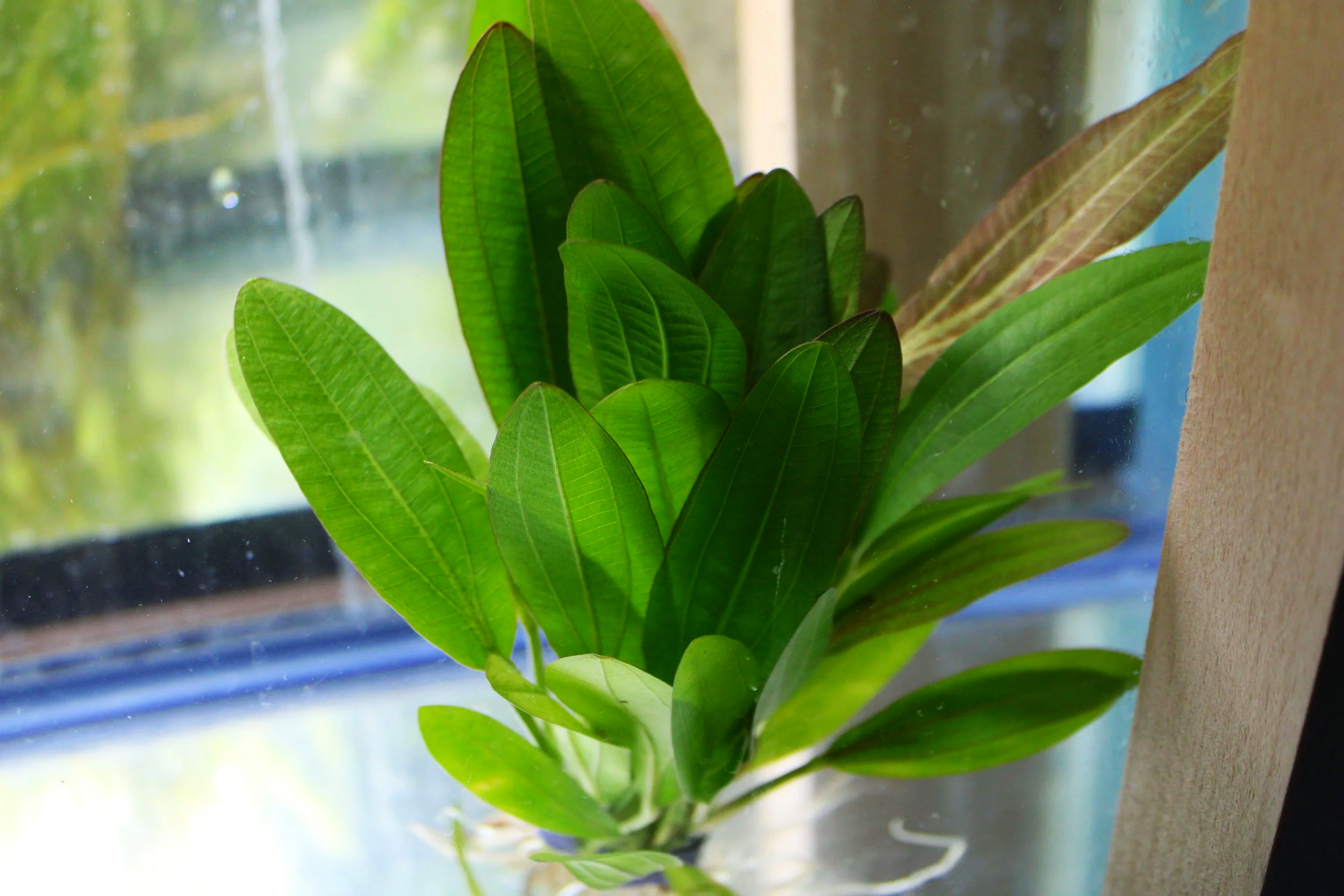
Plants are pest free! Some plants we sell are grown emersed which means out of water when they are stuck back in aquariums, they may experience some melting (Leaves Dying) this does not mean they are dead as typically the plants will bounce back this also means the plant may look different from the one shown in the photos and depending on your conditions the plant may also look different to how it looks for other people such as if your injecting CO2 or have high lighting many plants may appear more red.
Red Rubin Sword (Echinodorus) is a striking and popular red freshwater aquarium plant known for its deep red, burgundy, and dark green foliage. This beautiful sword plant is an excellent choice for adding bold color, height, and visual interest to planted aquariums, community tanks, large aquariums, and natural aquascapes.
Red Rubin Sword is a great centerpiece plant for aquarists looking to add rich red coloration to their freshwater aquarium. As the plant matures, it can develop a large rosette of broad leaves that creates a dramatic focal point while providing a lush, natural appearance.
Deep Red Foliage for Planted Aquariums
Red Rubin Sword is best suited for the midground or background of a freshwater aquarium, especially in medium to large tanks where it has room to spread. Its broad burgundy-red leaves create beautiful contrast against green aquatic plants and natural hardscape such as driftwood and aquarium rocks.
As an Echinodorus sword plant, Red Rubin develops an extensive root system and benefits greatly from a nutrient-rich aquarium substrate. Root tabs or other aquarium-safe substrate fertilizers can provide additional nutrients to support healthy root development and strong leaf growth.
When planting, place the roots firmly into the aquarium substrate while keeping the crown of the plant above the substrate. Avoid burying the crown, as this can cause rot and interfere with healthy growth.
Red Rubin Sword Care
Plant Type: Rosette / sword aquarium plant
Difficulty: Easy
Growth Rate: Moderate
Lighting: Low to moderate; stronger lighting can encourage deeper coloration
CO₂: Not required, but beneficial
Placement: Midground / background
Ideal For: Planted tanks, community aquariums, large aquariums, natural aquascapes
Substrate: Nutrient-rich substrate recommended
Propagation: Runners / daughter plants
Red Rubin Sword can become a substantial plant as it matures, so provide enough space for its leaves to spread. Remove older or damaged leaves at the base of the plant as needed to maintain a clean appearance and encourage healthy new growth.
Adequate lighting and nutrients can help the plant maintain its attractive red and burgundy coloration. While CO₂ is not essential, supplementation can encourage faster growth and stronger overall development.
A Beautiful Red Centerpiece Aquarium Plant
Red Rubin Sword is an excellent choice for aquarists looking for a hardy, colorful, and relatively easy-care red aquarium plant. Its broad burgundy foliage can create a dramatic focal point and provide a striking contrast against green aquarium plants.
Its easy-care nature makes it suitable for both beginner and experienced aquarists. Once established, Red Rubin Sword can become a long-lasting centerpiece that adds substantial foliage and color to a planted aquarium.
Whether you're creating a large planted aquarium, community tank, natural aquascape, or colorful freshwater display, Red Rubin Sword can bring rich red coloration, height, and lush foliage to your aquarium.
Add a Red Rubin Sword to your aquarium today and create a stunning red focal point with beautiful burgundy foliage.
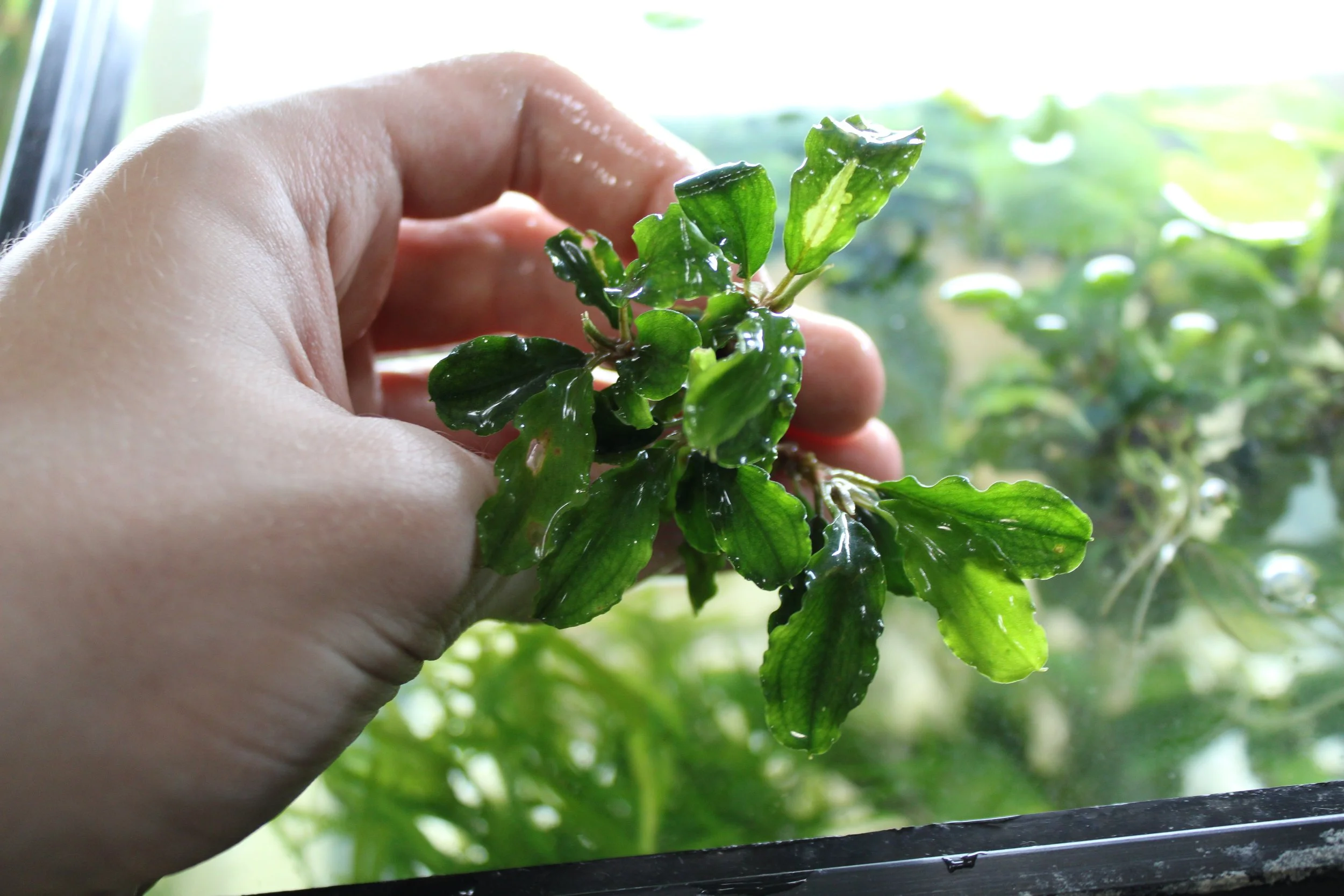
Plants are pest free! Some plants we sell are grown emersed which means out of water when they are stuck back in aquariums, they may experience some melting (Leaves Dying) this does not mean they are dead as typically the plants will bounce back this also means the plant may look different from the one shown in the photos and depending on your conditions the plant may also look different to how it looks for other people such as if your injecting CO2 or have high lighting many plants may appear more red.
Bucephalandra Green Wavy is a beautiful and unique freshwater aquarium plant prized for its compact growth, deep green coloration, and distinctive wavy leaves. This popular Bucephalandra variety is an excellent choice for planted aquariums, nano tanks, shrimp tanks, and aquascapes, especially when attached to natural hardscape such as driftwood and aquarium rocks.
Bucephalandra Green Wavy is a slow-growing, low-maintenance aquarium plant that can thrive under low to moderate lighting. It does not require injected CO₂, although CO₂ supplementation can encourage faster growth and healthier foliage. Its compact size makes it particularly useful for adding detail and texture to smaller aquariums and carefully designed aquascapes.
Unique Foliage for Aquascaping
Bucephalandra Green Wavy is named for its attractive wavy-edged leaves, which provide excellent texture and contrast against smooth-leaved aquarium plants. Its rich green foliage looks especially attractive when attached to driftwood, rocks, spider wood, and other aquarium hardscape.
This Bucephalandra variety is commonly used as a foreground or midground aquarium plant, although its placement can vary depending on the size and layout of your aquarium. Because it grows slowly and remains relatively compact, it can be used to create detailed aquascapes without quickly becoming overgrown.
Bucephalandra is a rhizome plant, so the rhizome should never be completely buried underneath aquarium substrate. Instead, attach the plant to rocks, driftwood, or other hardscape using aquarium-safe glue, thread, or fishing line. The roots will gradually attach themselves to the surface and anchor the plant.
Bucephalandra Green Wavy Care
Plant Type: Rhizome aquarium plant
Difficulty: Easy
Growth Rate: Slow
Lighting: Low to moderate
CO₂: Not required, but beneficial
Placement: Foreground / midground
Ideal For: Planted tanks, nano aquariums, shrimp tanks, aquascapes
Attachment: Rocks, driftwood, and other hardscape
Propagation: Rhizome division
Bucephalandra Green Wavy requires very little maintenance once established. Its slow growth means it generally does not require frequent trimming, making it an excellent choice for aquarists who prefer a low-maintenance planted aquarium.
Perfect for Shrimp Tanks & Nano Aquariums
Bucephalandra Green Wavy is particularly popular among shrimp keepers and aquascapers. Its small, textured leaves provide additional surfaces for shrimp to explore and graze, while its ability to attach directly to hardscape makes it easy to incorporate into natural-looking shrimp aquariums.
Its compact growth also makes it a fantastic choice for nano aquariums, where larger aquatic plants can quickly overwhelm the available space.
Whether you're creating a nano planted tank, shrimp aquarium, low-tech aquascape, or community aquarium, Bucephalandra Green Wavy is an attractive and easy-care aquatic plant that adds unique texture and rich green color to your freshwater aquarium.
Add Bucephalandra Green Wavy to your aquarium today and bring beautiful wavy foliage and natural green color to your aquascape.
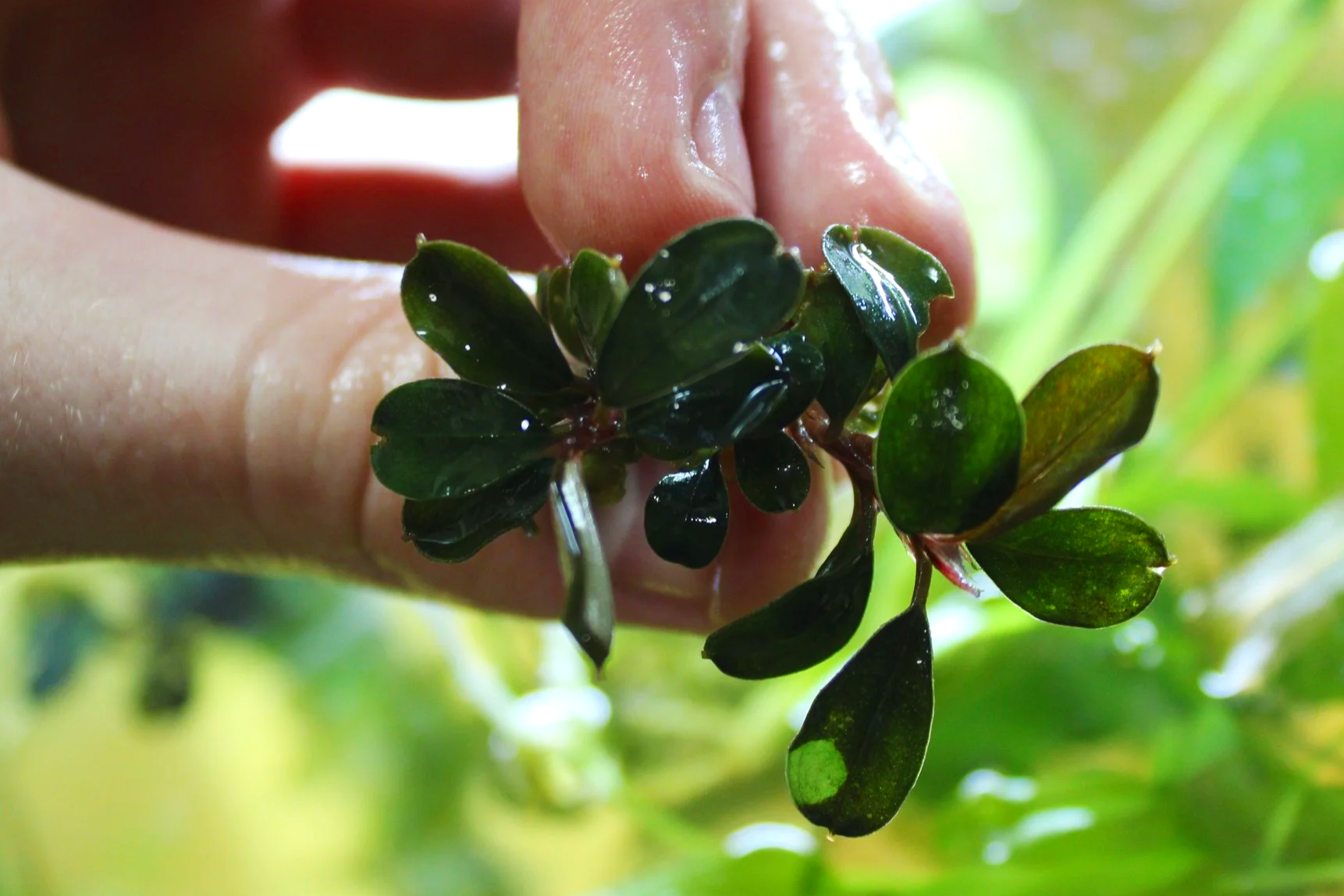
Plants are pest free! Some plants we sell are grown emersed which means out of water when they are stuck back in aquariums, they may experience some melting (Leaves Dying) this does not mean they are dead as typically the plants will bounce back this also means the plant may look different from the one shown in the photos and depending on your conditions the plant may also look different to how it looks for other people such as if your injecting CO2 or have high lighting many plants may appear more red.
Bucephalandra Batang Kawa is a beautiful and highly sought-after freshwater aquarium plant known for its compact growth, attractive dark green foliage, and distinctive leaf shape. This popular Bucephalandra variety is an excellent choice for planted aquariums, nano tanks, shrimp tanks, and aquascapes, especially when attached to natural hardscape such as driftwood and aquarium rocks.
Bucephalandra Batang Kawa is a slow-growing, low-maintenance rhizome plant that can thrive under low to moderate aquarium lighting. It generally does not require injected CO₂, making it a great choice for low-tech aquariums and beginner aquascapers, although CO₂ supplementation can encourage faster growth and more robust development.
Beautiful Foliage for Aquascaping
Bucephalandra Batang Kawa adds natural texture and rich green color to planted aquariums. Its compact growth habit makes it particularly useful for creating detailed nano aquascapes, shrimp tanks, and planted aquarium layouts without quickly taking over the available space.
This Bucephalandra variety looks especially attractive when attached to driftwood, spider wood, aquarium rocks, and other hardscape. It can be positioned throughout the foreground or midground to create natural-looking clusters of foliage.
Like other Bucephalandra varieties, Batang Kawa is a rhizome plant. The rhizome should not be buried underneath aquarium substrate because this can cause it to rot. Instead, attach the plant to hardscape using aquarium-safe glue, thread, or fishing line. Once established, its roots will naturally grow around the hardscape and secure the plant.
Bucephalandra Batang Kawa Care
Plant Type: Rhizome aquarium plant
Difficulty: Easy
Growth Rate: Slow
Lighting: Low to moderate
CO₂: Not required, but beneficial
Placement: Foreground / midground
Ideal For: Planted tanks, nano aquariums, shrimp tanks, low-tech aquariums, aquascapes
Attachment: Rocks, driftwood, and other hardscape
Propagation: Rhizome division
Bucephalandra Batang Kawa requires very little maintenance once established. Its slow growth means it generally does not require frequent trimming, making it an excellent choice for aquarists who want an attractive aquarium plant without constant maintenance.
Perfect for Shrimp Tanks & Nano Aquariums
Bucephalandra Batang Kawa is an excellent addition to freshwater shrimp aquariums. Its textured foliage creates additional surfaces for shrimp to explore and graze, while its ability to attach directly to hardscape makes it easy to incorporate into natural-looking shrimp aquascapes.
Its compact growth also makes it especially useful for nano aquariums, where larger plants can quickly overwhelm the available space. Combine it with driftwood, rocks, mosses, and other Bucephalandra varieties to create a detailed and natural planted aquarium.
Whether you're creating a nano planted tank, shrimp aquarium, low-tech aquascape, or community aquarium, Bucephalandra Batang Kawa is a versatile and easy-care aquatic plant that provides beautiful foliage and natural texture.
Add Bucephalandra Batang Kawa to your aquarium today and bring unique foliage and rich green color to your freshwater aquascape.
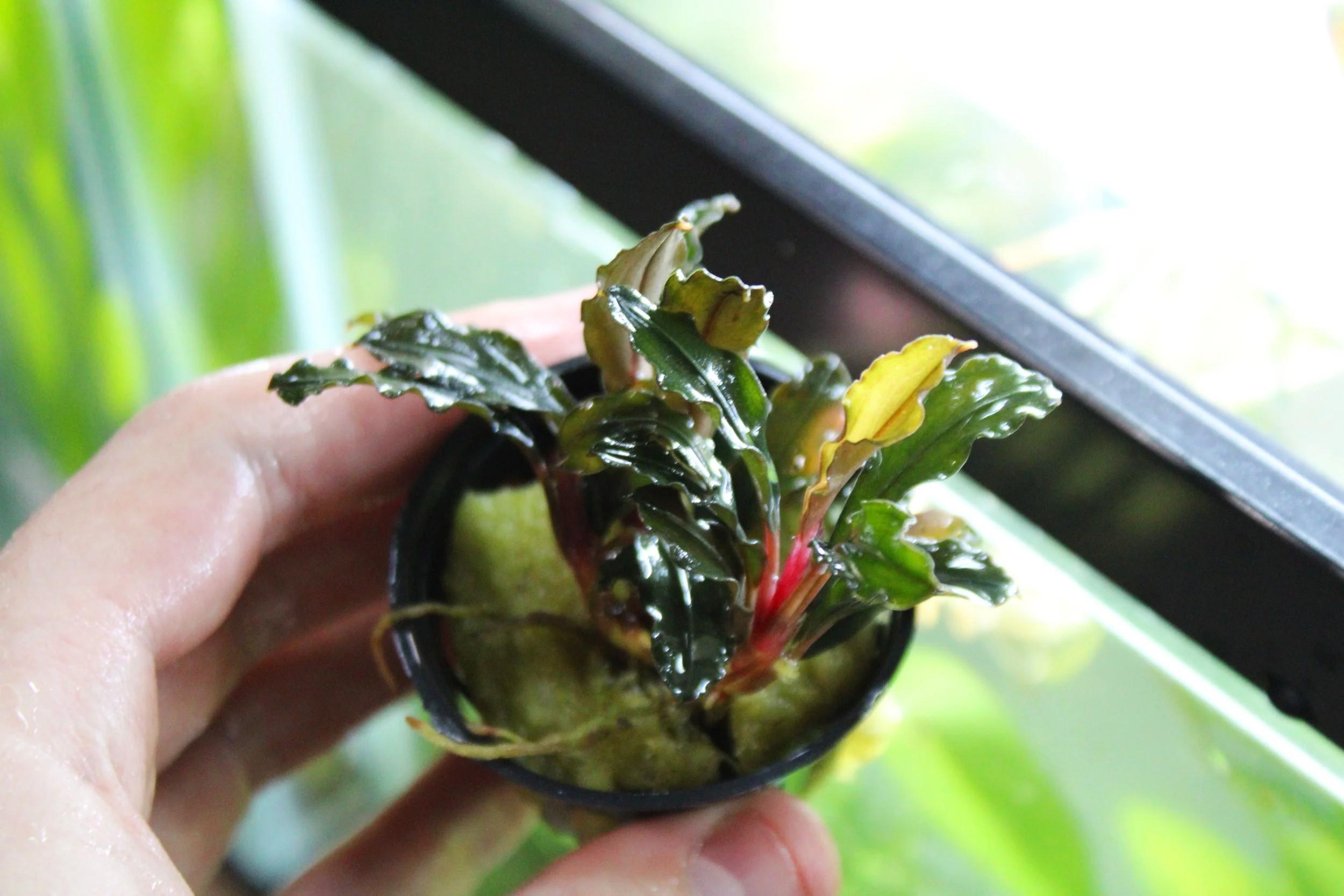
Plants are pest free! Some plants we sell are grown emersed which means out of water when they are stuck back in aquariums, they may experience some melting (Leaves Dying) this does not mean they are dead as typically the plants will bounce back this also means the plant may look different from the one shown in the photos and depending on your conditions the plant may also look different to how it looks for other people such as if your injecting CO2 or have high lighting many plants may appear more red.
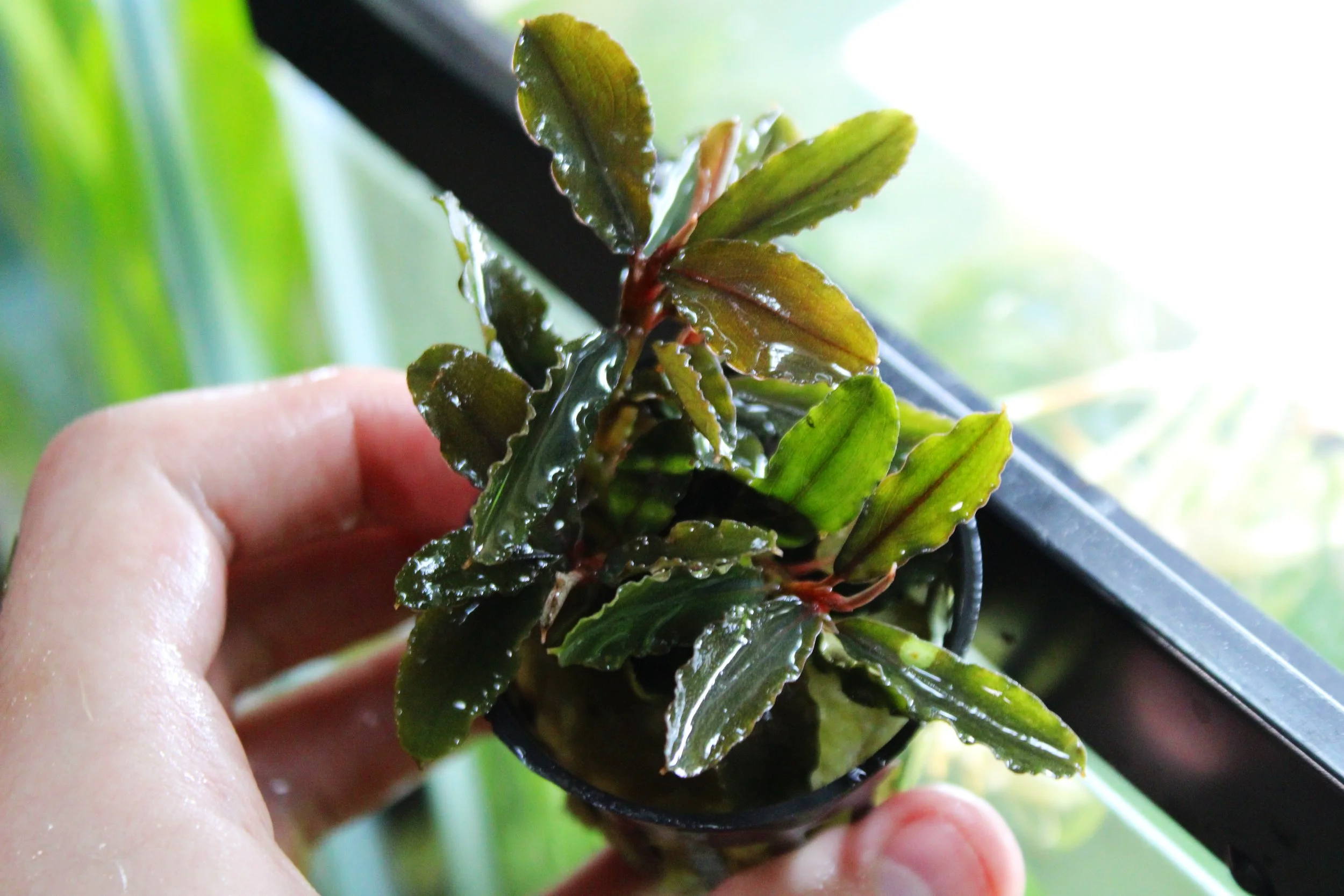
Plants are pest free! Some plants we sell are grown emersed which means out of water when they are stuck back in aquariums, they may experience some melting (Leaves Dying) this does not mean they are dead as typically the plants will bounce back this also means the plant may look different from the one shown in the photos and depending on your conditions the plant may also look different to how it looks for other people such as if your injecting CO2 or have high lighting many plants may appear more red.
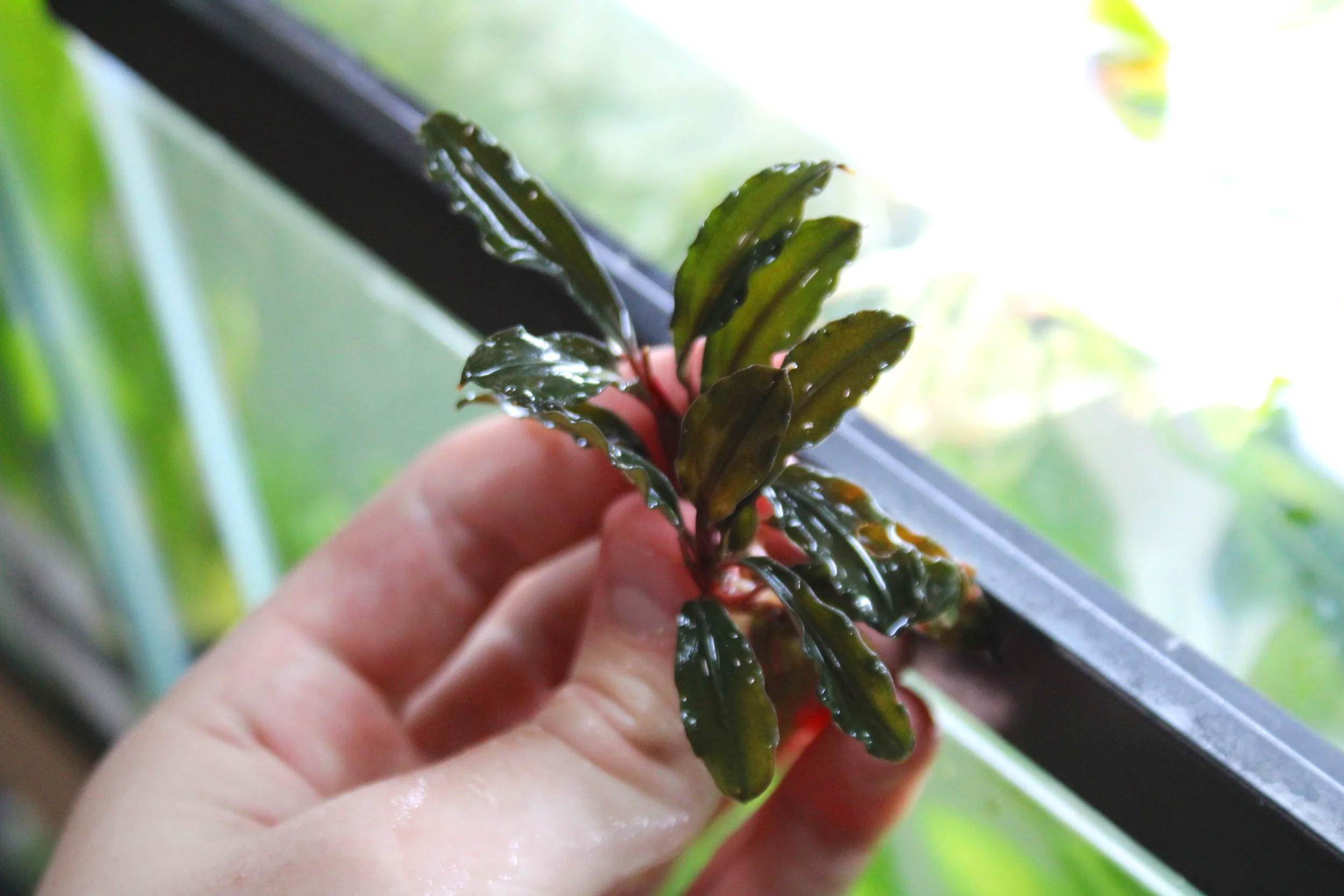
Plants are pest free! Some plants we sell are grown emersed which means out of water when they are stuck back in aquariums, they may experience some melting (Leaves Dying) this does not mean they are dead as typically the plants will bounce back this also means the plant may look different from the one shown in the photos and depending on your conditions the plant may also look different to how it looks for other people such as if your injecting CO2 or have high lighting many plants may appear more red.
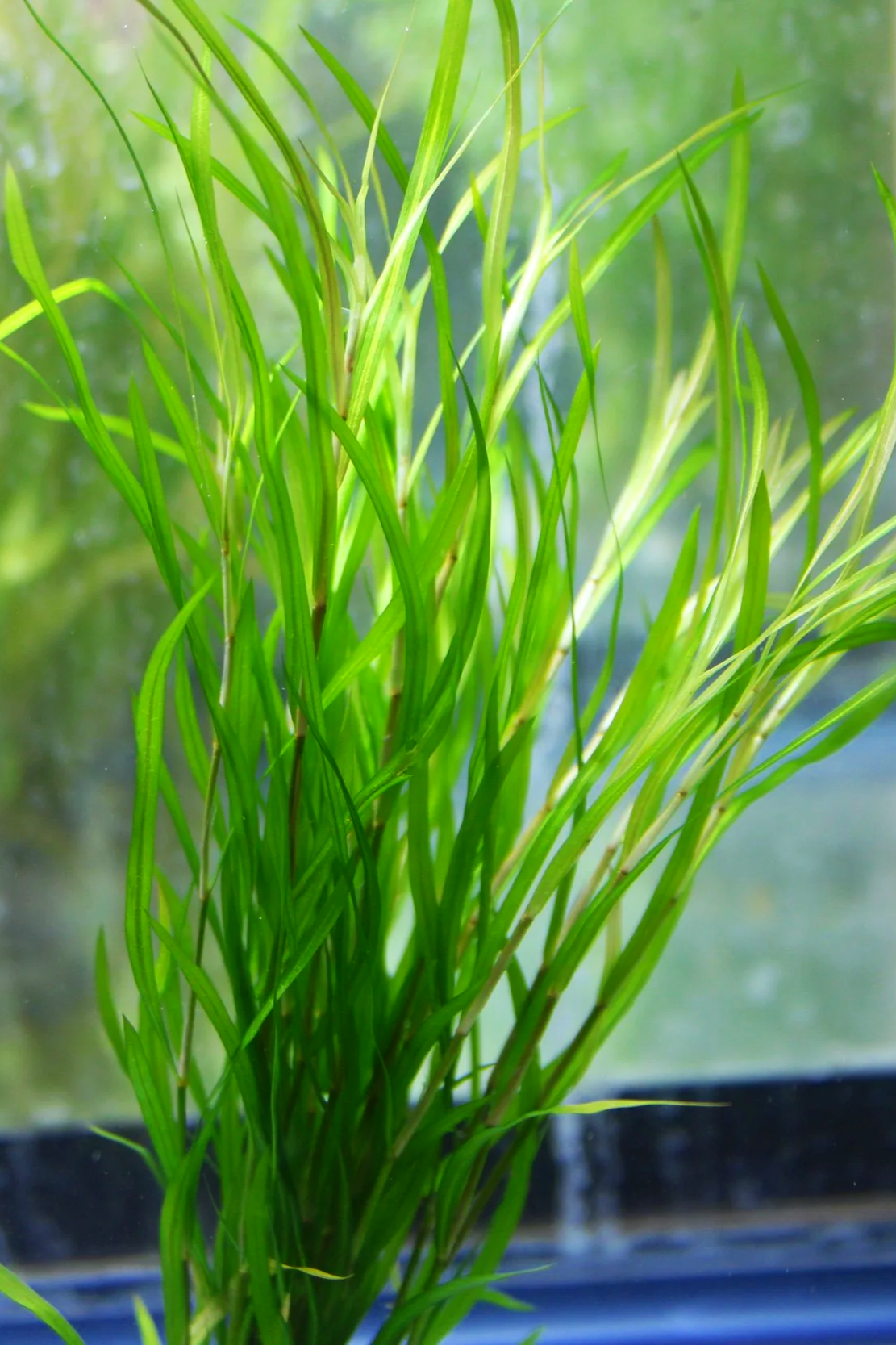
Plants are pest free! Some plants we sell are grown emersed which means out of water when they are stuck back in aquariums, they may experience some melting (Leaves Dying) this does not mean they are dead as typically the plants will bounce back this also means the plant may look different from the one shown in the photos and depending on your conditions the plant may also look different to how it looks for other people such as if your injecting CO2 or have high lighting many plants may appear more red.
1 Lead Bunch is around 4-7 stems
Potamogeton Gayi is a unique and attractive freshwater aquarium plant known for its long, narrow green leaves and graceful, flowing growth. This fast-growing aquatic plant is an excellent choice for planted aquariums, community tanks, natural aquascapes, and larger freshwater aquariums, where its tall, flowing foliage can create movement and depth.
Potamogeton Gayi is particularly useful for aquarists looking for a distinctive alternative to traditional stem plants. Its narrow leaves and upright-to-flowing growth can create a natural grass-like appearance while adding height and structure to a planted aquarium.
Long, Flowing Foliage for Aquascaping
Potamogeton Gayi is best suited to the midground or background of an aquarium. When planted in groups, its slender leaves can form attractive dense stands that provide excellent vertical structure and a natural appearance.
This aquatic plant is relatively easy to grow and can adapt to a variety of freshwater aquarium conditions. It generally performs well with moderate lighting and adequate nutrients. CO₂ supplementation is not strictly required, but providing additional CO₂ and nutrients can encourage faster, healthier growth.
Potamogeton Gayi is a rooted aquatic plant that should be planted directly into the aquarium substrate. Plant individual stems or rooted portions with enough space between them to allow the plants to establish and spread.
Potamogeton Gayi Care
Plant Type: Rooted aquatic plant
Difficulty: Easy to moderate
Growth Rate: Fast
Lighting: Low to moderate
CO₂: Not required, but beneficial
Placement: Midground / background
Ideal For: Planted tanks, community aquariums, natural aquascapes, larger aquariums
Propagation: Runners / side shoots
Because Potamogeton Gayi can grow relatively quickly, regular trimming may be helpful to keep it at the desired height. Removing older or overgrown foliage and replanting healthy portions can help maintain a dense and attractive group.
A Unique Freshwater Aquarium Plant
Potamogeton Gayi is an excellent choice for aquarists who want to add long, narrow foliage and natural movement to their freshwater aquarium. Its distinctive appearance can provide beautiful contrast against broad-leaved plants, carpeting plants, and hardscape.
Its flowing growth also makes it useful for creating a more natural-looking aquarium environment while providing additional structure and cover for smaller fish and shrimp.
Whether you're creating a natural planted aquarium, community tank, large aquascape, or freshwater biotope-style setup, Potamogeton Gayi is a unique aquatic plant that can add height, texture, and movement to your aquarium.
Add Potamogeton Gayi to your aquarium today and bring graceful, flowing green foliage to your freshwater aquascape.
Shop Fish and Aquarium Supplies!
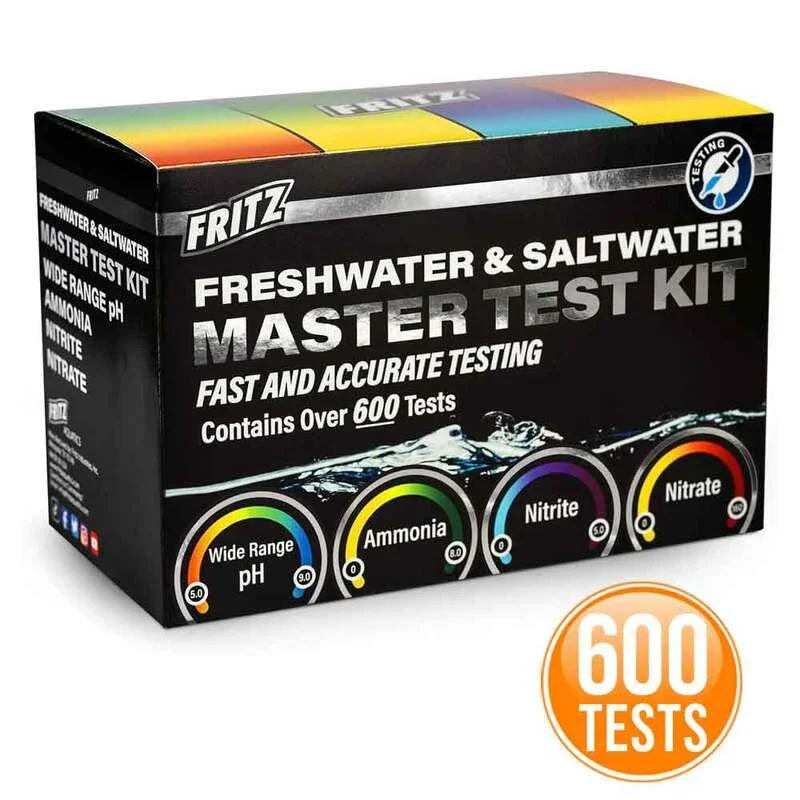
Maintain healthy aquarium water with the Fritz Aquatics Master Test Kit, a convenient liquid aquarium water testing kit designed to help monitor essential water parameters in freshwater and saltwater aquariums. This all-in-one aquarium test kit includes four essential tests for pH, ammonia, nitrite, and nitrate, making it an excellent choice for new aquarium setups, routine water quality checks, and established fish tanks.
Whether you're cycling a new aquarium, maintaining a freshwater community tank, or caring for a saltwater aquarium, the Fritz Master Test Kit helps you identify potential water quality problems before they become more serious. With liquid reagents, test tubes, clear instructions, and easy-to-read color charts, this aquarium water test kit makes regular water testing simple and convenient.
Four Essential Aquarium Water Tests in One Kit
The Fritz Master Test Kit combines four individual liquid test kits to help you monitor the most important water parameters for aquarium health.
pH Test: Measures the acidity or alkalinity of aquarium water to help you maintain conditions suitable for your fish and other aquatic life.
Ammonia Test: Detects ammonia, a potentially toxic compound that can accumulate in new aquariums, overstocked tanks, or systems with disrupted biological filtration.
Nitrite Test: Monitors nitrite levels during aquarium cycling and routine maintenance to help identify problems with biological filtration.
Nitrate Test: Measures nitrate accumulation, helping you determine when water changes and other maintenance may be needed.
Together, these four tests provide valuable information about aquarium water quality and the progress of the biological filtration cycle.
Ideal for New Aquariums and Aquarium Cycling
Establishing a new aquarium requires careful monitoring of ammonia, nitrite, and nitrate as beneficial bacteria develop in the biological filter. The Fritz Master Test Kit helps aquarium owners follow these changes and recognize when water parameters need attention.
It is also useful for established aquariums, where regular testing can reveal changes caused by excess fish waste, overfeeding, insufficient maintenance, or filtration problems.
Suitable for Freshwater and Saltwater Aquariums
The Fritz Master Test Kit is designed for use with both freshwater and saltwater aquariums. Its wide-range pH test, ammonia test, nitrite test, and nitrate test help fishkeepers monitor water conditions across a variety of aquarium environments.
Use it for freshwater community tanks, planted aquariums, tropical fish tanks, marine aquariums, and other compatible aquarium setups.
Easy-to-Use Liquid Aquarium Test Kit
Testing your aquarium water is straightforward. Collect a water sample in the included test tube, add the specified liquid reagents according to each test's instructions, allow the required color-development time, and compare the resulting color with the appropriate chart.
The kit includes the reagents and testing accessories needed to perform the four included tests, helping you keep your aquarium maintenance routine organized.
What's Included?
The Fritz Aquatics Master Test Kit includes:
One wide-range pH test kit
One ammonia test kit
One nitrite test kit
One nitrate test kit
Test tubes and caps
Liquid testing reagents
Color comparison charts
Instructions for use
Why Choose the Fritz Master Test Kit?
Reliable water quality monitoring is an essential part of responsible fishkeeping. The Fritz Master Test Kit brings four important aquarium water tests together in one convenient package, helping you monitor changing conditions and make informed aquarium maintenance decisions.
Whether you're setting up your first fish tank or maintaining an established freshwater or saltwater aquarium, the Fritz Aquatics Master Test Kit is a practical addition to your aquarium supplies.
Product Features
Complete liquid aquarium water testing kit
Tests pH, ammonia, nitrite, and nitrate
Suitable for freshwater and saltwater aquariums
Ideal for new tank cycling and routine water testing
Helps monitor biological filtration and water quality
Includes reagents, test tubes, instructions, and color charts
Four essential tests in one convenient package
Fritz Aquatics item number: 04009
Keep your aquarium water quality in check with the Fritz Freshwater & Saltwater Master Test Kit, a convenient solution for monitoring essential aquarium parameters and supporting a healthy aquatic environment.
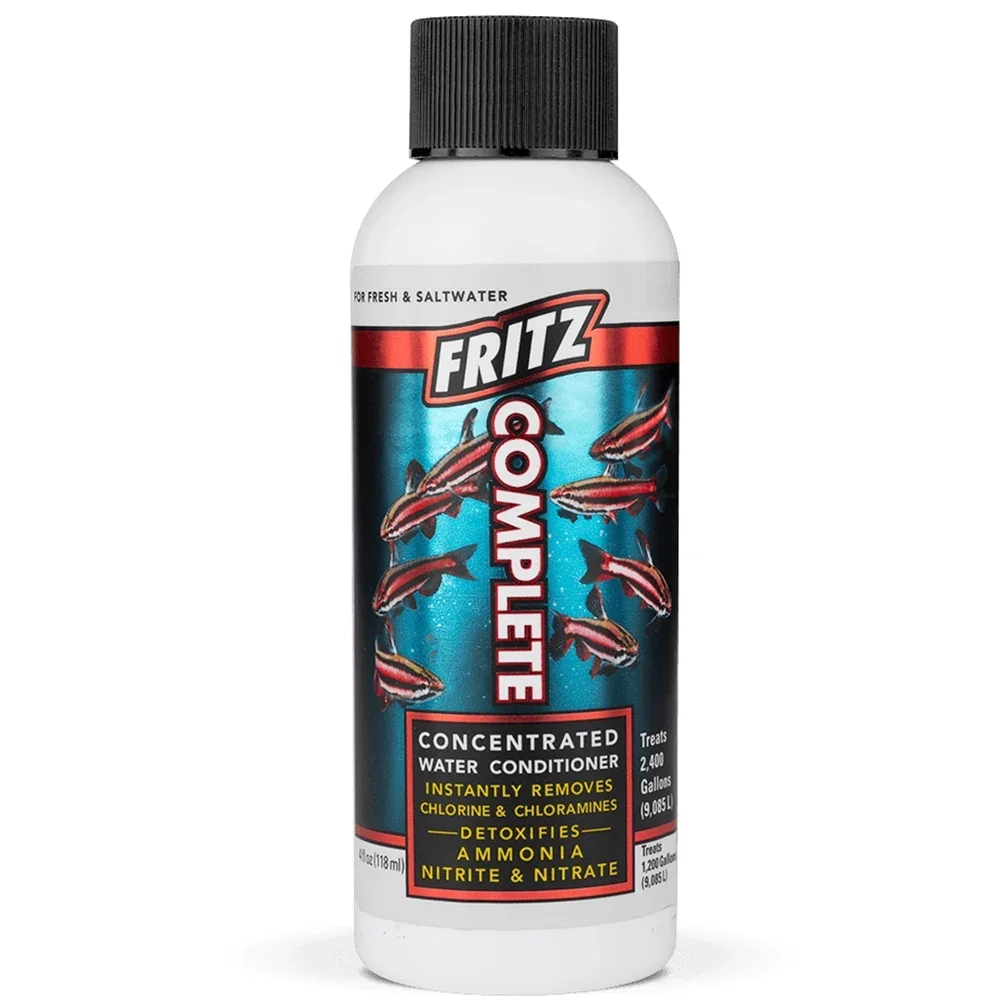
Keep your aquarium water safe for fish and other aquatic life with Fritz Complete Water Conditioner, a concentrated, full-spectrum aquarium water conditioner designed to neutralize chlorine and chloramine while detoxifying ammonia, nitrite, and nitrate. This powerful all-in-one water treatment helps make tap water suitable for aquarium use and supports water quality management during aquarium setup, routine water changes, and unexpected water quality problems.
Suitable for freshwater, saltwater, reef, and planted aquariums, Fritz Complete provides convenient, one-step water conditioning for both beginner and experienced aquarists. Its concentrated formula treats large volumes of water with a small amount of product, making it a practical addition to any aquarium maintenance routine.
Removes Chlorine and Chloramine from Tap Water
Municipal tap water often contains chlorine or chloramine to disinfect drinking water, but these chemicals can harm fish and beneficial aquarium bacteria. Fritz Complete helps neutralize chlorine and chloramine, allowing you to prepare replacement water before adding it to your aquarium.
For best results, add Fritz Complete to tap water before introducing the treated water into your fish tank.
Detoxifies Ammonia, Nitrite and Nitrate
Fritz Complete is more than a standard aquarium dechlorinator. Its full-spectrum formula also detoxifies ammonia, nitrite, and nitrate, helping you manage potentially harmful nitrogen compounds in aquarium water.
This makes it especially useful during new aquarium cycling, routine tank maintenance, and situations where water testing reveals elevated nitrogen compounds. Continue testing your aquarium water and performing appropriate water changes, as water conditioning does not replace proper filtration and aquarium maintenance.
Ideal for Freshwater, Saltwater and Reef Aquariums
The versatile Fritz Complete formula is designed for use in a wide range of aquarium environments, including:
Freshwater fish tanks
Saltwater aquariums
Marine and reef aquariums
Planted aquariums
New aquarium setups
Routine aquarium water changes
Aquarium water quality management
Fritz Complete does not affect aquarium pH when used as directed and is designed not to over-activate protein skimmers.
Concentrated Formula for Easy Aquarium Water Treatment
The recommended dosage is 5 mL (1 teaspoon) per 50 US gallons (189 liters) of water. This concentrated formula makes it easy to treat large quantities of tap water without adding excessive amounts of conditioner.
When treating aquarium water for ammonia, nitrite, or nitrate, calculate the dose based on the total aquarium volume rather than only the amount of replacement water.
For extremely high chloramine or nitrite levels, the manufacturer allows repeat or increased dosing under specified conditions. Follow the official instructions carefully, avoid overdosing, and ensure adequate water circulation and aeration.
Easy to Use for Routine Aquarium Maintenance
Whether you're filling a new aquarium, performing a partial water change, or responding to elevated ammonia levels, Fritz Complete offers a convenient way to condition aquarium water.
Simply measure the appropriate amount, add it to the replacement water before adding that water to the aquarium, and follow the manufacturer's directions for any treatment of existing aquarium water.
Important testing note: Fritz Complete can interfere with Nessler-type ammonia tests and Winkler-type oxygen tests. The manufacturer recommends salicylate-based ammonia test kits for compatible ammonia testing.
Product Features
Full-spectrum aquarium water conditioner
Neutralizes chlorine and chloramine
Detoxifies ammonia, nitrite, and nitrate
Suitable for freshwater and saltwater aquariums
Safe for reef and planted aquariums when used as directed
Does not affect pH
Designed not to over-activate protein skimmers
Concentrated formula for economical aquarium water treatment
Ideal for new tank setup and routine water changes
Helps manage aquarium nitrogen-cycle water quality issues
Choose Fritz Complete Water Conditioner for convenient, comprehensive aquarium water treatment. Whether you're preparing tap water for a new fish tank or maintaining an established freshwater, saltwater, reef, or planted aquarium, Fritz Complete helps neutralize common water contaminants and manage potentially harmful nitrogen compounds.
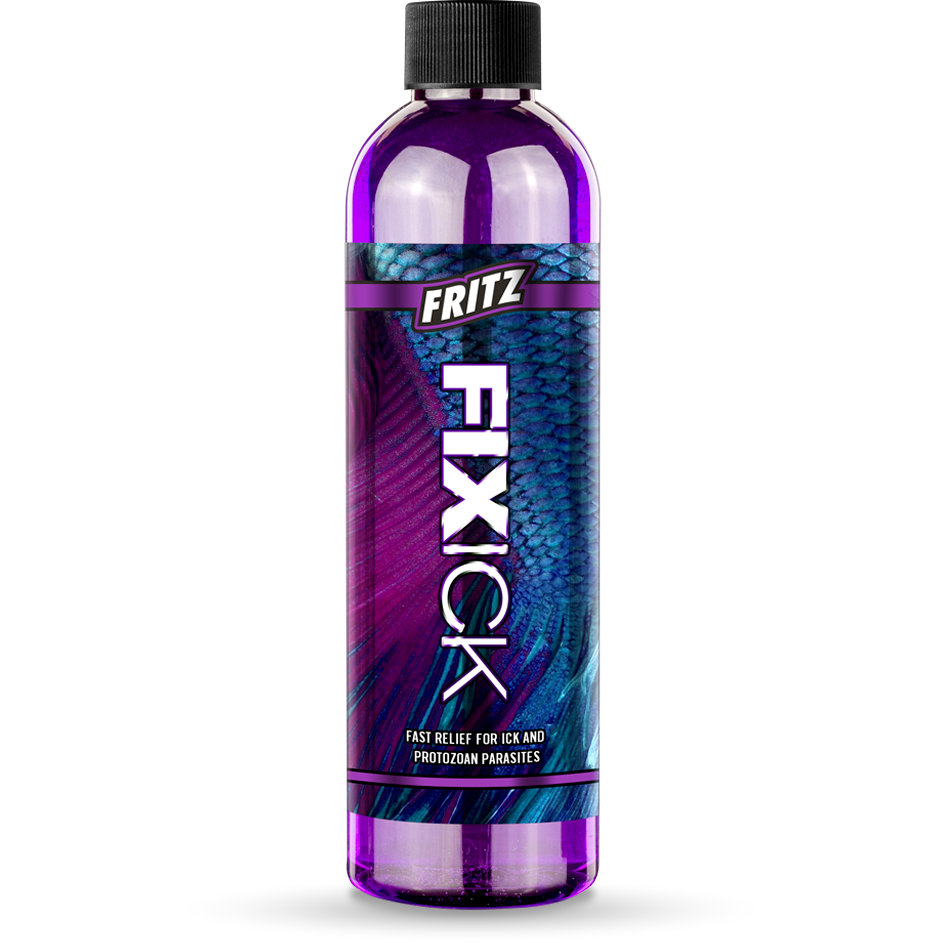
Help protect your fish from common external parasites with Fritz FixIck, a specialized aquarium ich treatment designed to treat Ich (Ick) and other protozoan parasites in freshwater and saltwater aquariums. This fast-acting fish medication targets common external parasitic infections, including Chilodonella, Trichodina, and Tetrahymena, helping aquarium owners manage fish health problems with a convenient treatment regimen.
Unlike many traditional ich medications, Fritz FixIck is formulated without formaldehyde or malachite green. Its formula includes gentian violet and is designed to provide effective parasite treatment while offering an alternative to some harsher conventional treatments. The distinctive purple color is characteristic of the product.
Whether you're treating an affected freshwater aquarium or managing parasitic infections in a saltwater fish system, Fritz FixIck provides a targeted treatment option for common external fish parasites.
Effective Treatment for Ich and External Parasites
Ich, also known as Ick or white spot disease, is a common parasitic infection that affects aquarium fish. Fritz FixIck is formulated to treat Ich and several other external protozoan parasites, including:
Ich (Ick) and white spot disease
Chilodonella
Trichodina
Tetrahymena
The manufacturer also reports additional antibacterial and antifungal properties that may help address certain secondary infection concerns.
Formaldehyde-Free and Malachite Green-Free Formula
Fritz FixIck offers an alternative to traditional ich treatments by excluding formaldehyde and malachite green from its formula. Gentian violet is one of its active ingredients and gives the medication its recognizable purple appearance.
This formulation is designed to provide effective treatment without relying on those two commonly used chemicals. Always follow the product label and observe fish closely throughout treatment.
Suitable for Freshwater and Saltwater Fish
Fritz FixIck is designed for use in freshwater and saltwater aquariums containing compatible fish. It can be used as part of a fish health management routine when external protozoan parasites are identified.
For best results, Fritz Aquatics recommends treating affected fish in a separate quarantine tank when possible. This can help simplify treatment and reduce unnecessary exposure of other aquarium inhabitants.
Important: Fritz FixIck is not recommended for systems containing invertebrates or coral. Shrimp, snails, clams, crabs, other crustaceans, mollusks, and corals must be removed before treatment.
Six-Day Aquarium Ich Treatment
Fritz FixIck uses a straightforward treatment schedule. Follow the current product label and manufacturer instructions carefully.
Day 1: Add 5 mL per 10 US gallons of aquarium water.
Day 2: Repeat the same dose.
Day 3: Perform a 25–30% water change.
Day 4: Repeat the recommended dose.
Day 5: Repeat the recommended dose.
Day 6: Perform a 25–30% water change.
Shake the bottle well before each dose. The manufacturer recommends raising the water temperature to 82–85°F before treatment, but only do so if the fish species and aquarium inhabitants can safely tolerate that temperature. Maintain adequate aeration and monitor fish for signs of distress.
During treatment, remove activated carbon and ion-exchange resins, and discontinue protein skimmers and UV sterilizers as directed. Avoid water changes during the course when possible; if a water change is necessary, follow the manufacturer's instructions for treating replacement water.
Available Sizes
Choose the bottle size that suits your aquarium treatment needs:
8 oz: Treats up to 480 gallons over a complete treatment course.
16 oz: Treats up to 946 gallons over a complete treatment course.
The amount treated reflects the manufacturer's stated treatment capacity and accounts for the repeated doses in the treatment schedule.
Product Features
Aquarium ich and external parasite treatment
Treats Ich, Chilodonella, Trichodina, and Tetrahymena
Designed for compatible freshwater and saltwater fish
Formulated without formaldehyde or malachite green
Contains gentian violet
May help address certain secondary bacterial and fungal concerns
Convenient six-day treatment schedule
Available in 8 oz, 16 oz, and 1-gallon sizes
Suitable for quarantine treatment when appropriate
Choose Fritz FixIck Aquarium Ich Treatment to help manage common external protozoan parasites in compatible freshwater and saltwater fish. With its targeted formula and structured dosing schedule, Fritz FixIck is a practical addition to an aquarium owner's fish health supplies.
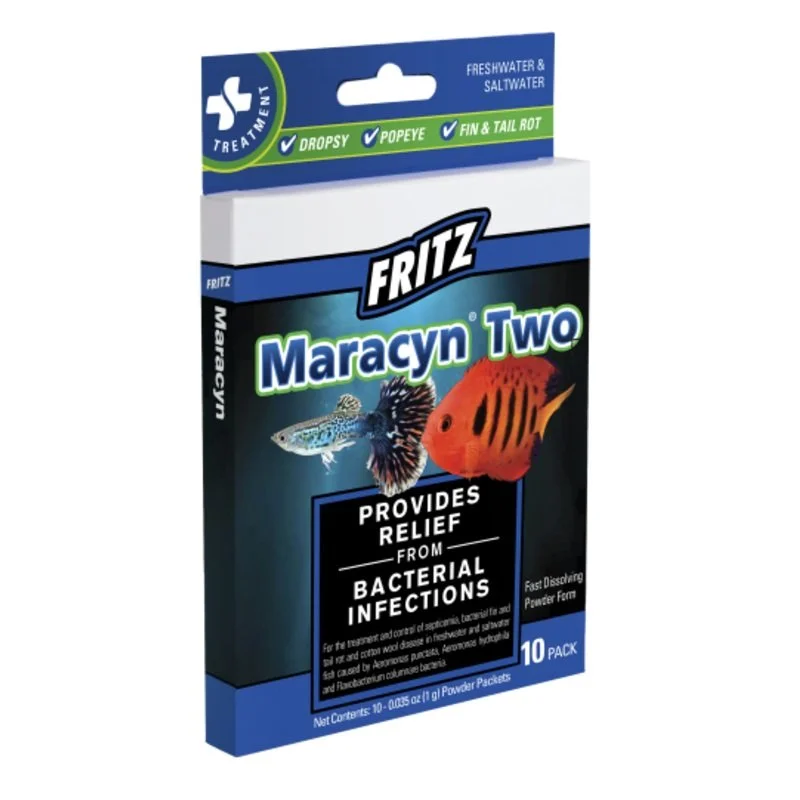
Help treat bacterial infections in aquarium fish with Fritz Maracyn Two, a broad-spectrum antibiotic formulated for freshwater and saltwater aquariums. Containing minocycline as its active ingredient, this fish medication is primarily effective against gram-negative bacteria associated with common aquarium fish illnesses, including fin and tail rot, popeye, dropsy, septicemia, and certain internal bacterial infections.
Unlike treatments that work mainly by dissolving into the aquarium water, Fritz Maracyn Two is absorbed through the fish’s skin, allowing the medication to reach therapeutic levels in the fish’s body during treatment. This makes it a useful option when addressing susceptible bacterial infections that may affect more than the outer surface of the fish.
Whether you're caring for freshwater community fish or marine aquarium species, Fritz Maracyn Two provides a targeted antibiotic treatment option for managing certain bacterial diseases. For the best results, identify the suspected infection when possible, follow the manufacturer’s dosing instructions, and monitor water quality throughout treatment.
Effective Treatment for Bacterial Fish Infections
Bacterial infections can affect aquarium fish in different ways, from visible fin damage to more serious systemic illness. Fritz Maracyn Two is primarily formulated to target gram-negative pathogenic bacteria and may help treat conditions such as:
Fin and tail rot
Popeye (swollen or protruding eyes associated with infection)
Dropsy-related bacterial infections
Septicemia
Certain internal bacterial infections
Secondary bacterial infections associated with wounds or parasite damage
Possible signs of illness include frayed or deteriorating fins, unusual lethargy, reduced appetite, clamped fins, or changes in normal swimming behavior. These symptoms can have several causes, so they should not automatically be assumed to indicate a bacterial infection. Consult an aquatic veterinarian or qualified fish-health professional if the diagnosis is uncertain or symptoms persist.
Minocycline-Based Antibiotic Formula
Fritz Maracyn Two contains minocycline, an antibiotic that is primarily effective against gram-negative bacteria. The medication is absorbed through the fish’s skin, helping deliver the active ingredient internally to combat susceptible infections.
The formula may also be effective against some gram-positive bacteria and fungal infections, according to the manufacturer, but it should not be considered a universal treatment for every disease. Selecting the appropriate medication depends on the organism responsible for the illness.
Use antibiotics responsibly and complete the prescribed course according to the product label, even if visible symptoms begin to improve before treatment ends.
Suitable for Freshwater and Saltwater Aquariums
Fritz Maracyn Two is designed for use in both freshwater and saltwater aquariums. It can be used to treat compatible ornamental fish when a susceptible bacterial infection is suspected.
For best results, Fritz Aquatics recommends using Maracyn Two in a separate quarantine or hospital tank when practical. This can make it easier to monitor the affected fish, manage treatment, and observe water conditions without unnecessarily medicating the display aquarium.
The manufacturer states that Maracyn Two is safe for use with invertebrates. However, responses can vary by species and aquarium conditions, so observe all tank inhabitants closely and follow the product label.
Five-Day Aquarium Antibiotic Treatment
Fritz Maracyn Two uses a five-day dosing schedule followed by a water change on day six. Follow the current package instructions and calculate the dose based on the actual volume of aquarium water.
Day 1: Add the contents of two packets per 10 US gallons of aquarium water.
Day 2: Add one packet per 10 US gallons.
Day 3: Add one packet per 10 US gallons.
Day 4: Add one packet per 10 US gallons.
Day 5: Add one packet per 10 US gallons.
Day 6: Perform a 25% water change.
Complete the full five-day treatment even if symptoms improve or disappear sooner. If symptoms improve but have not completely cleared, the manufacturer permits repeating the five-day course once. If there is no improvement, reassess the diagnosis and consult a fish-health professional rather than repeatedly using an ineffective medication.
Important Treatment Instructions
Remove activated carbon during treatment, as it can remove medication from the water.
Maintain adequate water circulation and aeration.
Do not perform routine water changes during the five-day dosing period unless water quality or fish distress makes intervention necessary.
Maracyn Two may inhibit beneficial nitrifying bacteria, which can contribute to elevated ammonia or nitrite. Test water regularly and take appropriate steps if levels rise.
Cloudiness may develop during treatment and should clear on its own, according to the manufacturer.
Protein skimmers may produce excessive foam. Discontinue skimmer use during treatment if foaming becomes a concern.
The manufacturer states that UV sterilizers can remain in use during treatment.
If fish show signs of distress following an accidental overdose, perform a large water change as directed by the manufacturer.
Always follow the instructions supplied with your specific product and seek expert advice if the fish's condition worsens.
Available Sizes
Fritz Maracyn Two is offered in packet and bulk formats, depending on the retailer and product version.
10-count package: Convenient for smaller treatment needs.
20-count package: Suitable for additional doses or larger treatment requirements.
Product Features
Broad-spectrum aquarium antibiotic for susceptible bacterial infections
Contains minocycline as the active ingredient
Primarily targets gram-negative pathogenic bacteria
Helps treat fin and tail rot, popeye, dropsy-related infections, and septicemia
Absorbed through the fish’s skin to reach internal tissues
Designed for freshwater and saltwater aquariums
Powder formula supplied in convenient packets or bulk containers
Five-day dosing schedule followed by a 25% water change on day six
Manufacturer states it is safe for use with invertebrates
Suitable for quarantine or hospital tank treatment when practical
Choose Fritz Maracyn Two Aquarium Antibiotic to help manage susceptible bacterial infections in freshwater and saltwater aquarium fish. With its minocycline-based formula and clearly defined treatment schedule, it offers aquarists a targeted option for addressing common bacterial fish health concerns when used according to the manufacturer's directions.
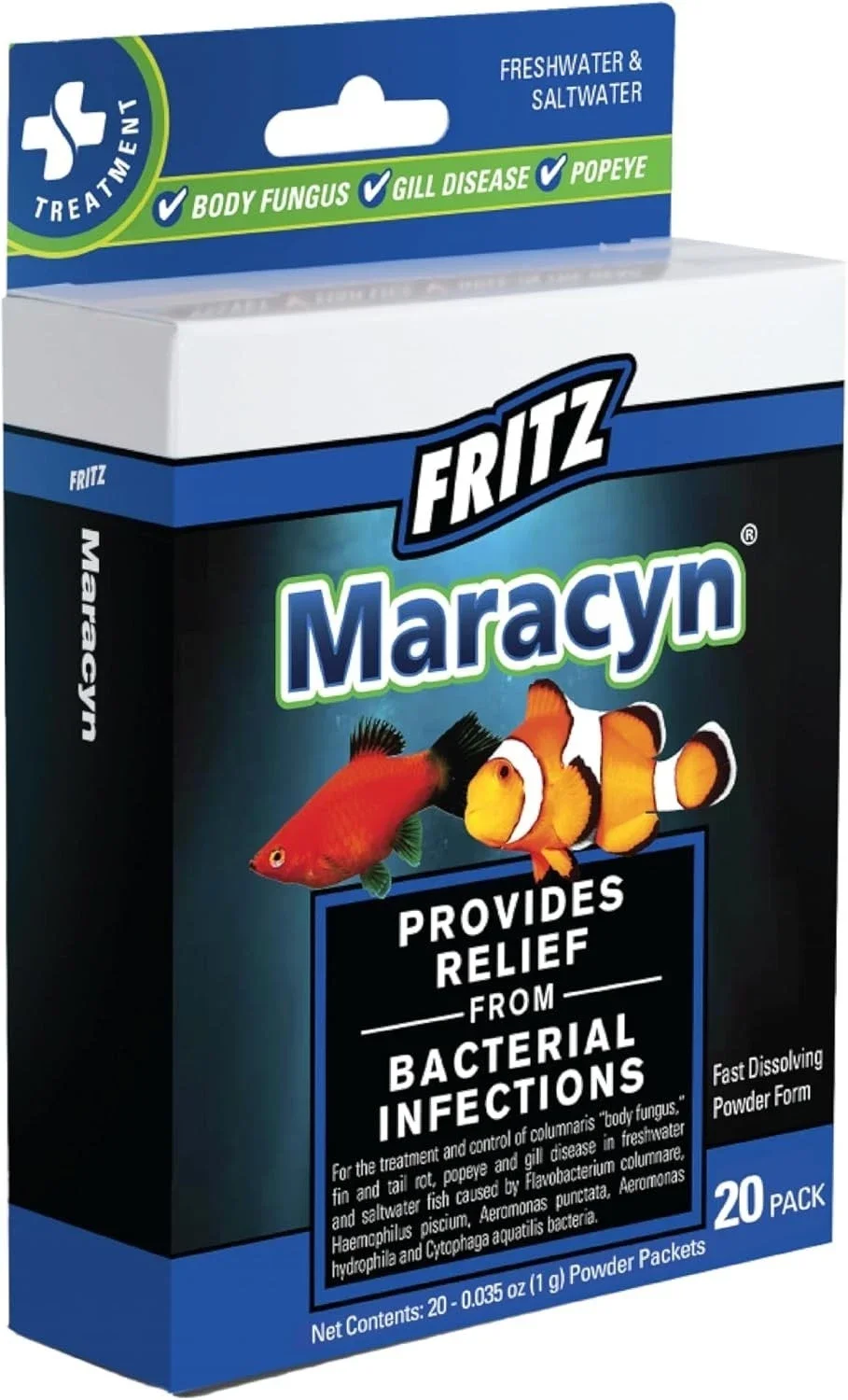
Help manage common bacterial infections in aquarium fish with Fritz Maracyn, a broad-spectrum antibiotic formulated for freshwater and saltwater aquariums. Containing erythromycin as its active ingredient, this medication is primarily effective against gram-positive bacteria associated with ornamental fish diseases. Fritz Maracyn is commonly used to treat conditions such as bacterial gill disease, popeye, mouth fungus, open lesions, hemorrhagic septicemia, and slime disease.
Unlike medications designed specifically for external parasites, Fritz Maracyn targets susceptible bacterial pathogens that can affect fish health and appearance. Its powder formula dissolves gradually in aquarium water, making it convenient to administer as part of a structured treatment routine.
Whether you're caring for a freshwater community aquarium or a saltwater fish system, Fritz Maracyn provides a targeted treatment option for certain bacterial infections. For best results, follow the manufacturer’s dosing instructions and seek expert guidance if the cause of the fish’s symptoms is unclear.
Effective Treatment for Common Bacterial Fish Infections
Bacterial diseases can affect fish in several ways, including irritation of the gills, damaged tissue, swollen eyes, and open sores. Fritz Maracyn is formulated to help treat susceptible bacterial infections associated with conditions such as:
Bacterial gill disease
Popeye (swollen or protruding eyes)
Mouth fungus, which may resemble a fungal growth but can be bacterial in origin
Open lesions and sores
Hemorrhagic septicemia
Slime disease
Certain other infections caused by susceptible gram-positive bacteria
Possible signs of bacterial illness include clamped fins, rapid or labored breathing, patchy coloration, unusual swimming behavior, hiding, or swollen eyes. These symptoms can have different causes, so an accurate diagnosis is important when selecting a treatment.
Erythromycin-Based Antibiotic Formula
Fritz Maracyn contains erythromycin, an antibiotic that is primarily effective against gram-positive pathogenic bacteria. The medication gradually dissolves in aquarium water, allowing it to be administered throughout the treatment period.
This makes Maracyn a useful option for certain bacterial infections affecting ornamental fish. It is not a universal treatment for all fish diseases, however, and it should not be confused with Fritz Maracyn Two, which contains minocycline and primarily targets gram-negative bacteria.
For suspected bacterial infections, choose a medication appropriate to the likely cause of illness and complete the recommended course according to the product label.
Suitable for Freshwater and Saltwater Aquariums
Fritz Maracyn is designed for use in both freshwater and saltwater aquariums. It can be used to treat compatible ornamental fish affected by susceptible bacterial infections.
For best results, Fritz Aquatics recommends using Maracyn in a separate quarantine or hospital tank when practical. This makes it easier to observe affected fish, manage treatment, and monitor their condition.
The manufacturer states that Maracyn is safe for use with invertebrates. Some sensitive aquatic plants may develop yellowing during treatment, so monitor plants and other aquarium inhabitants throughout the course.
Five-Day Aquarium Antibiotic Treatment
Fritz Maracyn uses a five-day dosing schedule followed by a water change on day six. Always check the instructions included with your specific package and calculate the dose based on the actual volume of aquarium water.
Day 1: Add one packet per 10 US gallons of aquarium water.
Day 2: Add one packet per 10 US gallons.
Day 3: Add one packet per 10 US gallons.
Day 4: Add one packet per 10 US gallons.
Day 5: Add one packet per 10 US gallons.
Day 6: Perform a 25% water change.
Complete all five doses even if visible symptoms improve sooner. If symptoms improve but have not completely disappeared, the manufacturer permits repeating the five-day course once. If there is no improvement after treatment, reassess the diagnosis rather than repeatedly using a medication that may not be effective against the underlying cause.
Important Treatment Instructions
Remove activated carbon and other chemical filtration media that may remove medication from the water.
Maintain adequate water flow and aeration throughout treatment.
Avoid routine water changes during the five-day dosing period unless water quality or fish distress requires intervention.
Protein skimmers may produce excessive foam. Discontinue skimmer use during treatment if foaming becomes a concern.
The manufacturer states that UV sterilizers can remain in use during treatment.
Maracyn may cause some sensitive plants to yellow temporarily.
The manufacturer states that Maracyn can be used alongside Maracyn Two, Maracyn Oxy, and Coppersafe when appropriate.
If fish show signs of distress following an overdose, perform a large water change.
Always follow the current product label and monitor fish closely during treatment.
Available Sizes
Choose the package size that best fits your aquarium treatment needs. Available sizes and coverage depend on the current product version.
10-count package: Treats up to 100 gallons over a complete five-day course.
20-count package: Treats up to 200 gallons over a complete five-day course.
100 g bulk jar: Treats up to 1,000 gallons, according to the manufacturer's listed coverage.
400 g bulk jar: Treats up to 4,700 gallons, according to the manufacturer's listed coverage.
Package sizes and availability may vary by retailer. Check the specific product listing to confirm the quantity and treatment capacity before purchasing.
Product Features
Broad-spectrum antibiotic for susceptible bacterial infections in ornamental fish
Contains erythromycin as the active ingredient
Primarily targets gram-positive pathogenic bacteria
Helps treat bacterial gill disease, popeye, mouth fungus, open lesions, and other listed conditions
Gradually dissolving powder formula
Designed for freshwater and saltwater aquariums
Manufacturer states it is safe for use with invertebrates
Convenient five-day dosing schedule
Available in packet and bulk formats
Suitable for quarantine or hospital tank treatment when practical
Choose Fritz Maracyn Aquarium Antibiotic to help manage susceptible bacterial infections in freshwater and saltwater fish. With its erythromycin-based formula and straightforward treatment schedule, Fritz Maracyn offers aquarists a targeted option for addressing common bacterial fish health concerns when used according to the manufacturer’s directions.
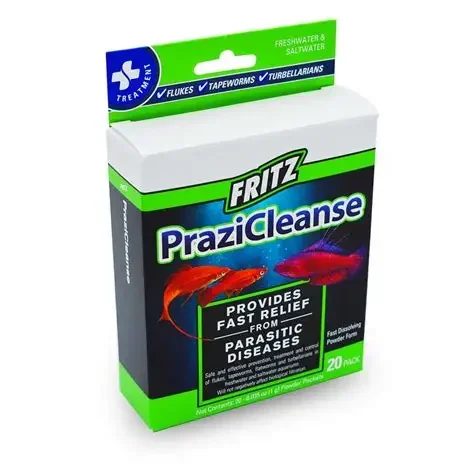
Help protect aquarium fish from unwanted parasites with Fritz PraziCleanse, a targeted anti-parasitic treatment formulated for freshwater and saltwater aquariums. Containing praziquantel as its active ingredient, PraziCleanse is designed to treat several common parasitic infections, including skin flukes, gill flukes, tapeworms, flatworms, and turbellarians.
This fast-dissolving powder treatment offers a convenient way to manage susceptible parasites that can affect fish health, feeding behavior, and overall condition. Fritz PraziCleanse is designed to treat parasites without discoloring or clouding aquarium water, making it a practical option for aquarists who want to maintain a clear viewing environment while treating affected fish.
Whether you're managing a freshwater community aquarium or a saltwater fish system, Fritz PraziCleanse provides a targeted treatment option for several common internal and external parasitic infections. For best results, follow the manufacturer's dosing instructions and monitor fish throughout the treatment period.
Effective Treatment for Common Fish Parasites
Parasitic infections can affect a fish's skin, gills, or digestive system. Fritz PraziCleanse contains praziquantel, an anti-parasitic ingredient used to control susceptible flatworms and related parasites. It is formulated to treat:
Skin flukes: Parasites that may cause excess mucus, irritation, scratching, and rubbing against aquarium surfaces.
Gill flukes: Parasites that can affect breathing and may cause rapid gill movement, gasping, or swollen gills.
Tapeworms: Internal parasites that can contribute to weight loss and poor body condition.
Flatworms: Susceptible parasitic flatworms that affect aquarium fish.
Turbellarians: Certain flatworms targeted by the product's formulation.
Possible signs of parasitic infection include weight loss, reduced appetite, clamped fins, excess mucus, unusual swimming, or difficulty breathing. These symptoms can have several causes, so accurate identification is important when choosing a treatment.
Praziquantel-Based Anti-Parasitic Formula
Fritz PraziCleanse contains praziquantel, an active ingredient used to treat susceptible parasitic worms and flukes. Its fast-dissolving powder formula makes it easy to administer directly to aquarium water according to the product label.
Unlike some aquarium medications that visibly tint the water, PraziCleanse is formulated not to color or cloud aquarium water. The manufacturer also states that it will not negatively affect biological filtration when used as directed.
PraziCleanse is intended for susceptible parasites rather than every type of fish disease. It should not be considered a universal treatment for protozoan infections, bacterial illnesses, or fungal conditions.
Suitable for Freshwater and Saltwater Aquariums
Fritz PraziCleanse is designed for use in both freshwater and saltwater aquariums. It can be used to treat compatible ornamental fish affected by susceptible flukes, tapeworms, flatworms, and turbellarians.
For best results, Fritz recommends using PraziCleanse in a separate quarantine or hospital aquarium when practical. This allows aquarists to observe affected fish, manage treatment more easily, and monitor water quality.
The manufacturer states that PraziCleanse is safe for plants and most invertebrates, including corals, shrimp, snails, clams, and other crustaceans and mollusks.
Important: PraziCleanse is not safe for marine systems containing tube worms or feather dusters. Remove these animals before treatment or treat affected fish in a separate quarantine tank.
Five-Day Aquarium Parasite Treatment
Fritz PraziCleanse uses a simple dosing schedule with a repeat treatment after five days. Follow the current product label and calculate the dose using the actual volume of aquarium water.
Day 1: Add one packet per 20 US gallons of aquarium water.
Days 2–4: No additional dose is required.
Day 5: Perform a 25% water change.
Day 6: Repeat the initial treatment by adding one packet per 20 US gallons.
For best results, complete the recommended treatment schedule and observe fish for signs of improvement.
Important Treatment Instructions
Remove activated carbon and ion-exchange resins during treatment, as these may remove medication from the water.
Turn off UV sterilizers during treatment.
In marine aquariums, discontinue protein skimmers while treating and resume operation after treatment is complete.
Maintain adequate water flow and aeration.
Avoid unnecessary water changes during treatment unless water quality concerns require intervention.
If ammonia or nitrite becomes a concern, use an appropriate aquarium water detoxifier according to its label.
If an overdose occurs, the manufacturer recommends removing the medication with Fritz MaxOut Pro or similar carbon-based media.
No water changes, pH adjustments, or temperature adjustments are necessary before treatment if aquarium readings are already within the recommended range. Always follow the current package directions and monitor fish closely.
Available Sizes
Choose the package size that best fits your aquarium treatment needs:
10-count package: Treats up to 200 gallons.
20-count package: Treats up to 400 gallons.
Each packet contains 190 mg of praziquantel. Treatment capacity is based on the manufacturer's listed coverage and the recommended dosage of one packet per 20 US gallons.
Product Features
Aquarium parasite treatment containing praziquantel
Treats susceptible skin and gill flukes
Effective against tapeworms, flatworms, and turbellarians
Designed for freshwater and saltwater aquariums
Fast-dissolving powder formula
Formulated not to discolor or cloud aquarium water
Manufacturer states it will not negatively affect biological filtration when used as directed
Safe for plants and most invertebrates
Not suitable for systems containing tube worms or feather dusters
Convenient five-day interval before repeat treatment
Available in 10-count and 20-count packages
Suitable for quarantine or hospital tank treatment when practical
Choose Fritz PraziCleanse Aquarium Parasite Treatment to help manage susceptible parasitic infections in freshwater and saltwater fish. With its praziquantel-based formula, convenient packet dosing, and compatibility with plants and most invertebrates, PraziCleanse offers a practical option for aquarium parasite management when used according to the manufacturer's instructions.
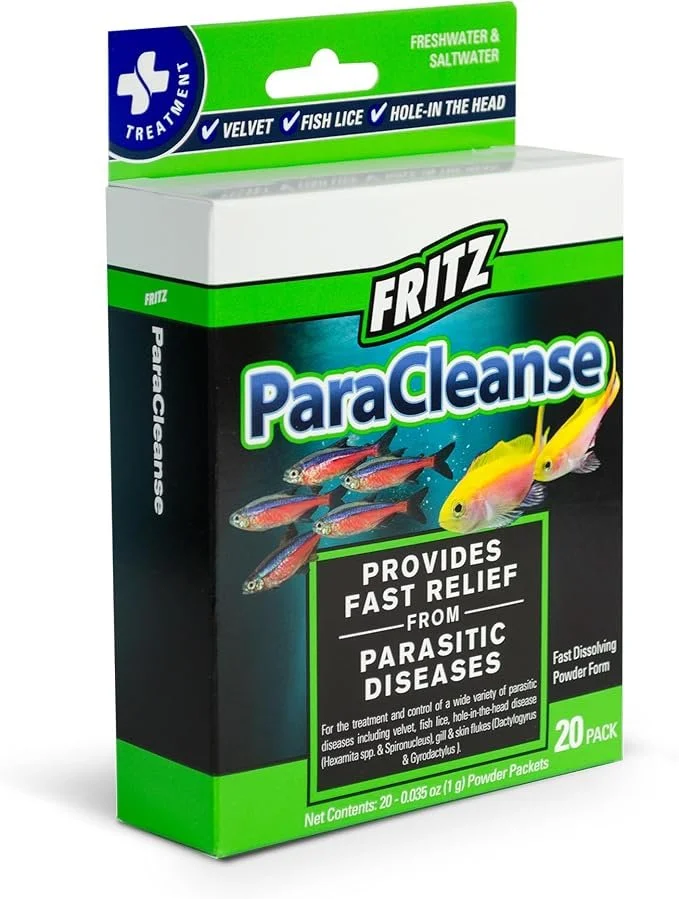
Help manage common parasitic infections in aquarium fish with Fritz ParaCleanse, a targeted fish medication formulated for freshwater and saltwater aquariums. Combining metronidazole and praziquantel, this treatment is designed to target susceptible protozoan parasites and parasitic worms, including organisms associated with hole-in-the-head disease and infections caused by gill and skin flukes.
Unlike single-ingredient treatments, Fritz ParaCleanse combines two active ingredients to address different types of parasites. Its fast-dissolving powder formula makes it convenient to administer directly to aquarium water, while its medicated-food application provides another option for treating fish that are eating normally.
Whether you're treating a freshwater community aquarium or managing parasite concerns in a marine fish system, Fritz ParaCleanse offers a targeted treatment option for specific parasitic infections. For best results, follow the manufacturer's dosing instructions and monitor fish closely throughout treatment.
Effective Treatment for Common Fish Parasites
Parasitic infections can affect fish externally or internally, potentially causing irritation, appetite loss, weight loss, breathing difficulties, or changes in normal behavior. Fritz ParaCleanse is formulated to treat susceptible parasites associated with conditions such as:
Hole-in-the-head disease: A condition associated with protozoan parasites such as Hexamita and Spironucleus.
Gill flukes: Parasites that can interfere with normal breathing and cause rapid gill movement.
Skin flukes: External parasites that may cause excess mucus, scratching, and skin irritation.
Certain protozoan infections: Metronidazole targets susceptible protozoans associated with specific fish diseases.
Certain parasitic flatworms: Praziquantel is effective against susceptible flukes and other flatworms.
Symptoms such as rapid breathing, reduced appetite, unusual feces, or rubbing against aquarium surfaces can have several causes. Correctly identifying the suspected infection is important when choosing a treatment.
Dual-Action Metronidazole and Praziquantel Formula
Fritz ParaCleanse contains metronidazole and praziquantel, two active ingredients that target different types of susceptible parasites.
Metronidazole: Used to treat certain protozoan infections, including those associated with Hexamita and Spironucleus.
Praziquantel: An anti-parasitic ingredient used to treat susceptible flukes and other flatworms.
This combination offers aquarists a targeted option for managing certain parasitic infections without relying on a single active ingredient. However, ParaCleanse is not a universal treatment for every fish disease and does not replace medications specifically formulated for nematodes or roundworms.
Suitable for Freshwater and Saltwater Aquariums
Fritz ParaCleanse is designed for use in both freshwater and saltwater aquariums. It can be used to treat compatible ornamental fish affected by susceptible parasitic infections.
For best results, consider treating affected fish in a separate quarantine or hospital tank when practical. This makes it easier to monitor fish, administer medication, and manage water quality during treatment.
Fritz provides instructions for both direct aquarium-water treatment and medicated-food administration. Choose the method appropriate for the suspected infection and follow the product label carefully.
Five-Day Aquarium Parasite Treatment
Fritz ParaCleanse uses a scheduled dosing routine to help manage susceptible parasitic infections. Follow the current package instructions and calculate the dosage using the actual volume of aquarium water.
Day 1: Add one packet per 10 US gallons of aquarium water.
Day 2: No additional dose is required.
Day 3: Repeat the dose of one packet per 10 US gallons.
Day 4: No additional dose is required.
Day 5: Perform a 25% water change.
Follow the manufacturer's label for guidance on repeating treatment if symptoms persist. Complete the recommended course and monitor fish for signs of improvement.
Important Treatment Instructions
Remove activated carbon and other chemical filtration media during water treatment, as they may remove medication.
Turn off UV sterilizers while treating.
In marine aquariums, discontinue protein skimmers during treatment.
Maintain adequate water circulation and aeration.
Monitor ammonia and nitrite, particularly if fish are already stressed or the aquarium's biological filtration is unstable.
Avoid unnecessary water changes during treatment unless water quality or fish distress requires intervention.
Follow the product label for overdose response and any repeat-treatment instructions.
Always read the instructions supplied with your specific package before dosing.
Medicated Fish Food Option
Fritz ParaCleanse can also be mixed into fish food, offering an alternative for fish that are eating normally.
Mix one packet with one tablespoon of normal fish food.
Add a small amount of water if needed to help incorporate the medication.
Allow the mixture to soak for at least 30 minutes.
Feed according to the manufacturer's instructions for the recommended treatment period.
Refrigerate or freeze leftover medicated food as directed, and discard any remaining food after the treatment course.
Medicated food may be useful when oral administration is appropriate for the suspected infection. Follow the product label carefully and ensure affected fish consume the medicated food.
Available Sizes
Choose the package size that best suits your aquarium treatment needs:
10-count package: Treats up to 100 gallons per initial treatment course.
20-count package: Treats up to 200 gallons per initial treatment course.
Each packet contains metronidazole and praziquantel. Confirm the current package label for exact ingredient quantities, treatment coverage, and instructions.
Product Features
Aquarium parasite treatment containing metronidazole and praziquantel
Targets susceptible protozoan parasites and parasitic flatworms
Used for certain infections associated with hole-in-the-head disease and gill and skin flukes
Designed for freshwater and saltwater aquariums
Can be administered directly to aquarium water or mixed with fish food
Fast-dissolving powder formula
Convenient packet-based dosing
Suitable for quarantine or hospital tank treatment when practical
Available in 10-count and 20-count packages
Choose Fritz ParaCleanse Aquarium Parasite Treatment to help manage susceptible parasitic infections in freshwater and saltwater fish. With its combination of metronidazole and praziquantel, ParaCleanse provides a targeted treatment option for aquarists when used according to the manufacturer's directions.
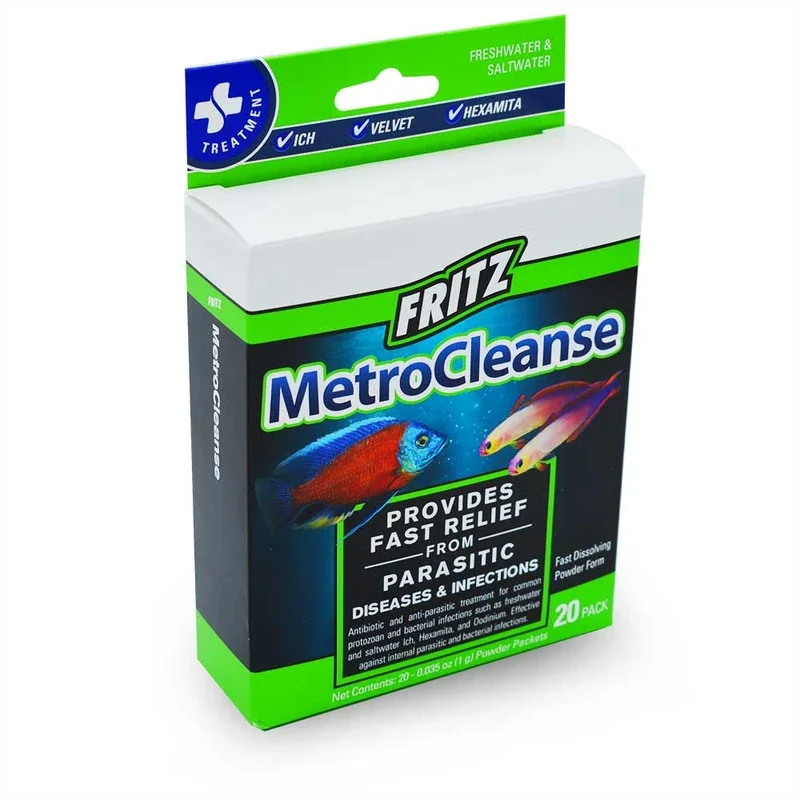
Help protect aquarium fish from common parasitic infections with Fritz MetroCleanse, a metronidazole-based treatment designed for freshwater and saltwater aquariums. Formulated to address certain protozoan parasites and bacterial infections, MetroCleanse is used to treat conditions associated with Ich, Hexamita, and Oodinium, commonly known as velvet. It is also effective against certain internal and external parasitic and bacterial infections.
With two application methods available, Fritz MetroCleanse can be added directly to aquarium water or mixed into fish food. This flexibility allows aquarists to select a treatment approach suited to their aquarium and the condition being addressed. When medicated food is used, the treatment can also be administered in systems containing invertebrates, following the manufacturer's directions.
Whether you're managing a freshwater aquarium or a marine fish system, Fritz MetroCleanse provides a targeted treatment option for certain parasitic and bacterial health concerns. For best results, follow the product instructions carefully and monitor fish behavior and water quality throughout treatment.
Effective Treatment for Common Fish Parasites
Parasitic infections can affect fish externally, internally, or both, depending on the organism involved. Fritz MetroCleanse contains metronidazole and is formulated to help treat several common protozoan infections, including:
Ich (Ick): A parasitic disease commonly associated with small white spots and rubbing or scratching against aquarium surfaces.
Hexamita: A protozoan parasite associated with certain internal infections in fish.
Oodinium (velvet): A parasitic disease that may cause fine yellowish or gold-colored spots, color loss, and irritation.
Certain internal parasitic infections: MetroCleanse can be used against susceptible internal parasites according to the manufacturer's directions.
Certain bacterial infections: The manufacturer also identifies activity against some bacterial infections.
Symptoms such as rapid breathing, excess mucus, appetite loss, unusual swimming, or repeated scratching can have several causes. Correctly identifying the suspected disease helps determine whether MetroCleanse is an appropriate treatment.
Metronidazole-Based Formula
Fritz MetroCleanse contains metronidazole, an active ingredient used to target susceptible protozoan organisms. It is formulated for aquarium use and comes in a fast-dissolving powder that can be administered through the aquarium water or incorporated into food.
The water-treatment method exposes fish to the medication through the aquarium environment, while medicated food delivers it through feeding. The most suitable approach depends on the suspected infection, whether the fish are eating, and the other inhabitants of the aquarium.
MetroCleanse is not a universal remedy for every parasite or bacterial disease. Use it for conditions listed by the manufacturer and consult an aquatic veterinarian or qualified fish-health professional if symptoms persist or the diagnosis is uncertain.
Suitable for Freshwater and Saltwater Aquariums
Fritz MetroCleanse is designed for use in both freshwater and saltwater fish systems. It can be used as part of a treatment plan for compatible ornamental fish affected by susceptible parasitic or bacterial infections.
For best results, the manufacturer recommends treating fish in a separate hospital or quarantine aquarium when practical. This makes it easier to observe the affected fish, manage medication, and monitor water parameters.
Important: If dosing MetroCleanse directly into aquarium water, remove all invertebrates before treatment. The manufacturer permits use in systems containing invertebrates when the medication is administered through medicated food according to the label directions. This includes aquariums containing corals, shrimp, snails, clams, and other crustaceans or mollusks.
Two Convenient Treatment Methods
Fritz MetroCleanse offers two ways to administer the medication. Always use the current package instructions and measure the aquarium's actual water volume as accurately as possible.
Method 1: Direct Aquarium Water Treatment
For broadcast treatment, the manufacturer recommends the following schedule:
Dosage: Add one packet per 20 US gallons of aquarium water.
Frequency: Repeat every 48 hours until symptoms disappear.
Maximum course: Do not exceed ten treatments.
Before dosing: Remove all invertebrates from the aquarium.
During treatment: Maintain adequate water flow and aeration, and monitor water quality.
For best results, use a quarantine or hospital tank when practical. Remove activated carbon and ion-exchange resins during treatment, and discontinue UV sterilizers and protein skimmers as directed by the manufacturer. Avoid water changes during treatment when possible, provided aquarium conditions remain safe.
Method 2: Medicated Fish Food
For aquarists who prefer to administer medication through feeding, MetroCleanse can be mixed into the fish's normal food.
Mix one packet per tablespoon of normal fish food.
Add a small amount of water if the food is dry to help incorporate the medication.
Feed the medicated mixture daily until symptoms disappear, for up to three weeks.
Refrigerate or freeze leftover medicated food between feedings.
Follow the label directions and observe whether the fish are eating normally.
The medicated-food method is the manufacturer's recommended option when treating fish in systems containing invertebrates. No filtration adjustment is required for this method, according to the manufacturer.
Important Treatment Instructions
Maintain adequate aeration and water circulation throughout treatment.
Remove activated carbon and ion-exchange resins when using the water-treatment method.
Turn off UV sterilizers during water treatment.
In marine aquariums, discontinue protein skimmers during treatment and resume their use after treatment is complete.
Avoid unnecessary water changes while treating if aquarium parameters remain within safe ranges.
Monitor ammonia and nitrite, particularly in systems where biological filtration may be affected.
When treatment is complete and symptoms have resolved, replace chemical filtration and resume normal equipment operation and feeding.
If an overdose occurs, the manufacturer recommends removing the medication with carbon-based media or a suitable product such as Fritz MaxOut Pro.
Always follow the current package label. If fish show signs of distress or water quality deteriorates, prioritize fish safety and take appropriate corrective action.
Available Sizes
Choose the package size that best suits your aquarium treatment needs:
10-count package: Treats up to 200 gallons based on the manufacturer's listed coverage.
20-count package: Treats up to 400 gallons based on the manufacturer's listed coverage.
Each packet contains 200 mg of metronidazole. Actual treatment capacity depends on the aquarium volume and the number of doses required for the condition being treated.
Product Features
Metronidazole-based aquarium parasite treatment
Designed for freshwater and saltwater aquariums
Targets certain protozoan parasites, including Hexamita and Oodinium
Manufacturer-listed use for Ich and certain internal and external infections
Can be administered directly to aquarium water or mixed with fish food
Medicated-food method can be used in systems containing invertebrates when directed
Fast-dissolving powder formula
Does not discolor or cloud aquarium water, according to the manufacturer
Convenient 10-count and 20-count package options
Suitable for quarantine or hospital tank treatment when practical
Choose Fritz MetroCleanse Aquarium Parasite Treatment to help manage certain protozoan parasites and susceptible infections in freshwater and saltwater fish. With flexible water-dosing and medicated-food options, MetroCleanse offers aquarium owners a practical treatment choice when used according to the manufacturer's directions.
Live Shrimp, Snails And Invertebrates
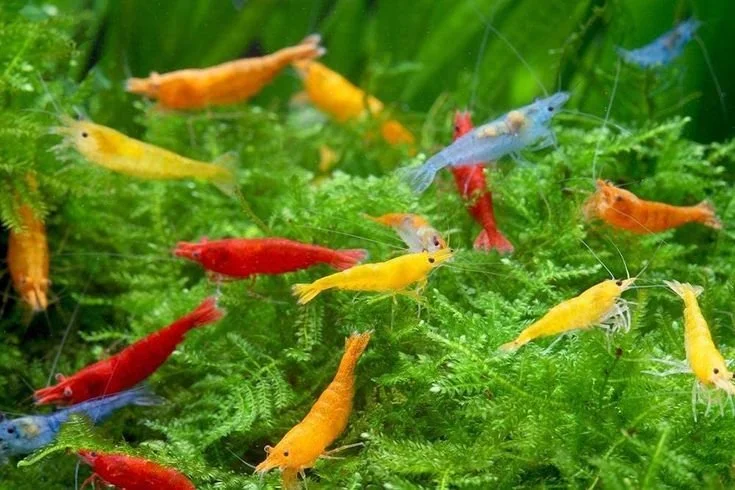
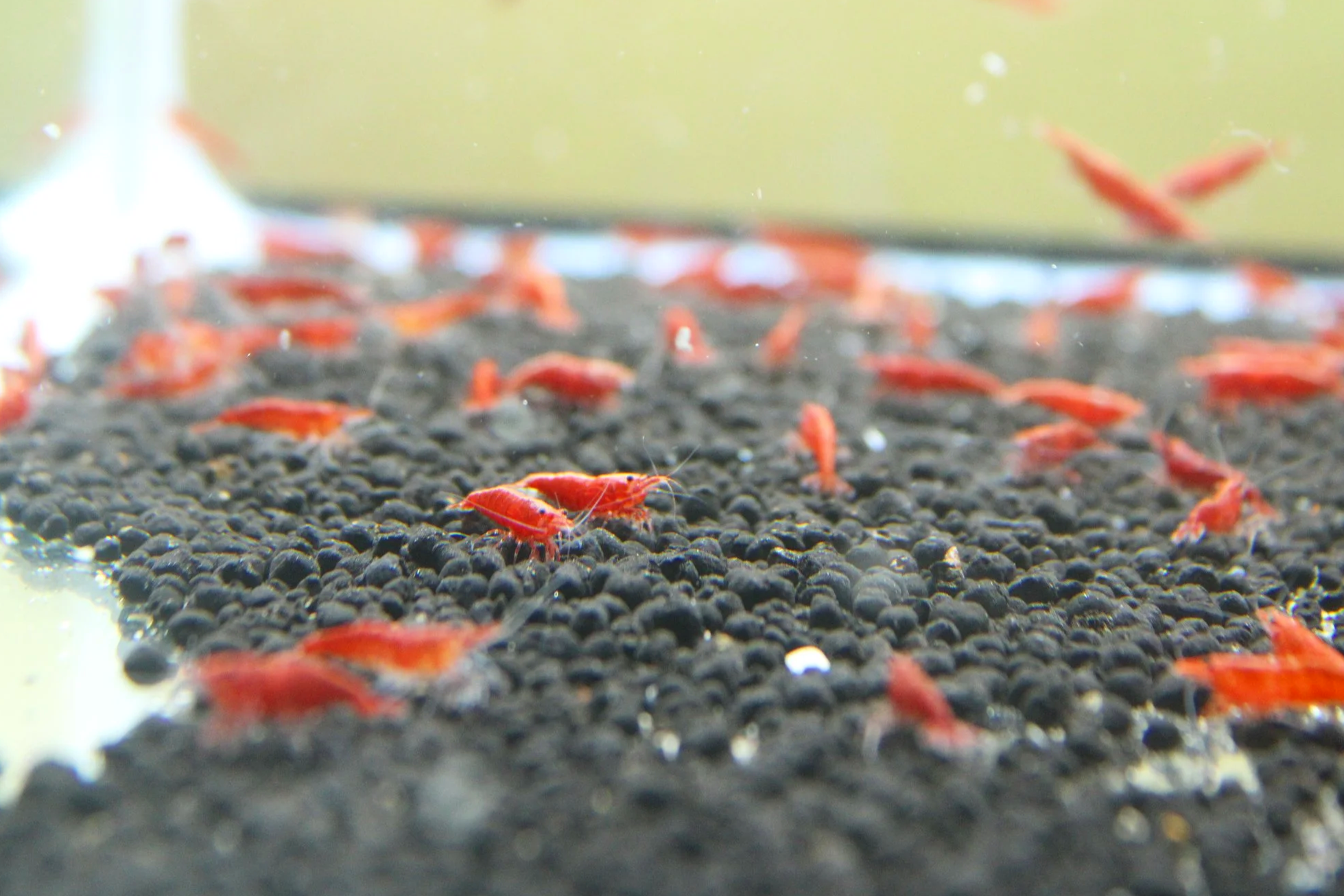
The Painted Fire Red Neocaridina Shrimp is one of the highest-grade red shrimp available, prized for its deep, opaque crimson coloration and full-body coverage. Unlike lower-grade red cherry shrimp, Painted Fire Reds display intense, solid red pigmentation across the entire body, making them a standout choice for planted aquariums and shrimp-focused setups. Hardy, active, and beginner-friendly, these shrimp are perfect for both new and experienced aquarists looking to build a vibrant colony.
Approximate Shipping Size: 0.5–0.75 inches
Appearance
Painted Fire Red Shrimp feature rich, uniform red coloration that extends from head to tail, often including the legs and antennae. This high-grade line is selectively bred for maximum color density and minimal transparency, creating a bold, eye-catching contrast against plants, substrate, and hardscape. As they mature, coloration becomes even deeper and more consistent.
Temperament & Behavior
These shrimp are completely peaceful and spend most of their time grazing on surfaces throughout the aquarium. They are highly active and display natural foraging behavior, constantly picking at biofilm, algae, and detritus. Painted Fire Reds thrive in colonies and feel most secure when kept in groups.
Care Requirements
Painted Fire Red Neocaridina Shrimp are hardy and adaptable, making them ideal for a wide range of freshwater aquariums. They thrive in stable tanks with plenty of plants, mosses, and surface area for grazing.
Tank Size: 5 gallons minimum
Temperature: 68–78°F
pH: 6.5–7.8
Hardness: Moderate
Aquascape: Moss, plants, driftwood, biofilm-rich surfaces
Tank Mates
Best kept in shrimp-only setups or with small, peaceful tank mates such as nano fish, rasboras, Corydoras, Otocinclus, and other non-aggressive species. Avoid large or predatory fish that may prey on shrimp.
Diet & Feeding
Painted Fire Red Shrimp are natural grazers that feed on biofilm and algae. Supplement their diet with high-quality shrimp pellets, algae wafers, blanched vegetables, and occasional protein-rich foods. A varied diet helps maintain strong coloration and supports healthy molting.
Quick Facts
Scientific Name: Neocaridina davidi
Common Name: Painted Fire Red Shrimp
Care Level: Easy
Temperament: Peaceful
Diet: Omnivore / Grazer
Max Size: ~1–1.2 inches
Tank Level: Bottom / All levels
Breeding: Easy (freshwater, no special conditions required)
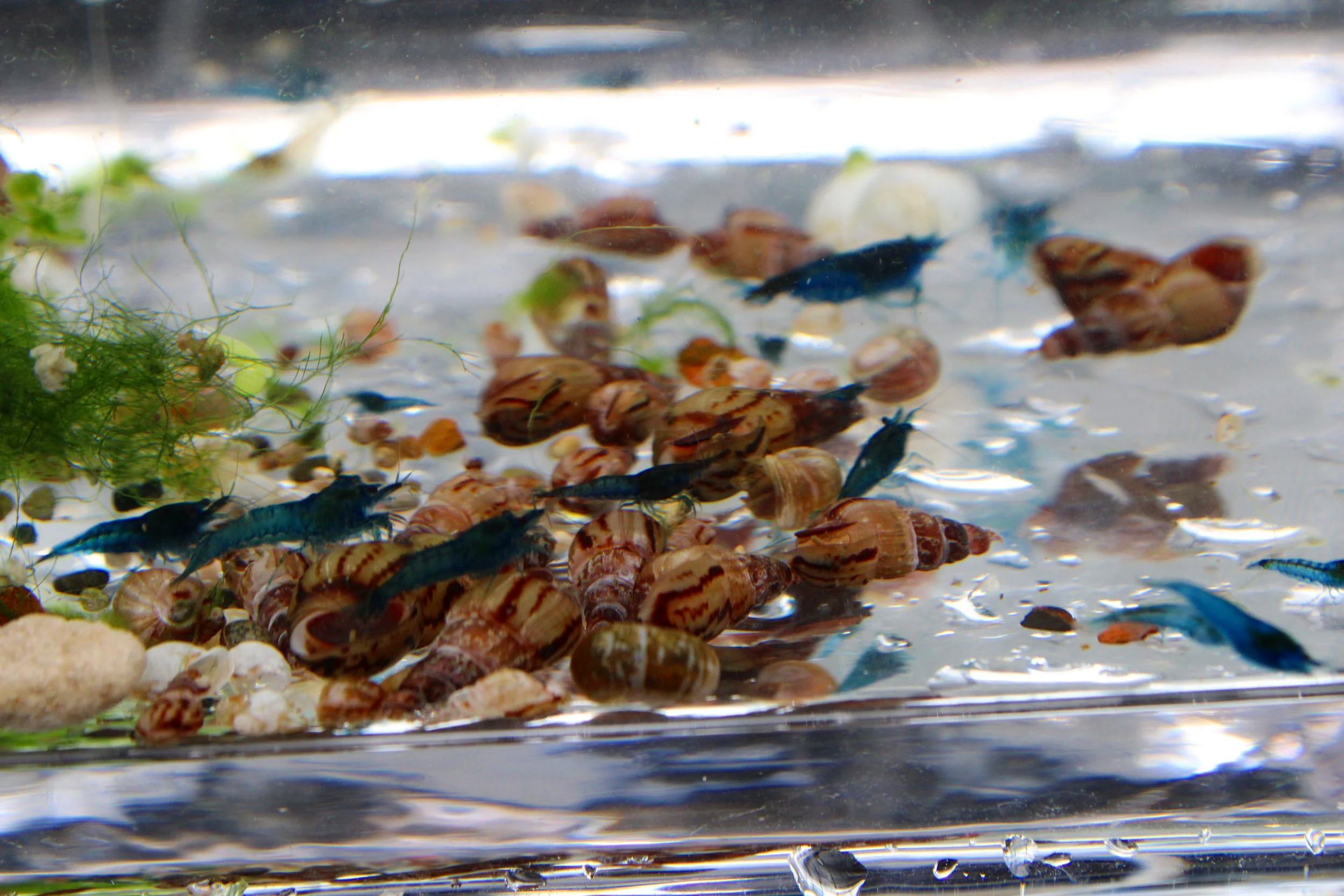
The Blue Dream Shrimp is a popular Neocaridina variety known for its vivid sky-blue coloration and gentle, peaceful behavior. Its bright and uniform blue tones make it a standout addition to planted tanks, nano aquariums, or species-only shrimp colonies.
Shipped at 0.5–0.75 inches, these juveniles are hardy and will mature to around 1–1.2 inches, with their blue coloration becoming richer and more vibrant as they grow.
Care & Aquarium Requirements:
Blue Dream Shrimp thrive in soft, stable, slightly acidic to neutral water (pH 6.0–7.5, temperature 70–78°F). Planted tanks with moss, driftwood, and biofilm surfaces provide ideal grazing and hiding spots. Peaceful and social, they do best in species-focused Neocaridina tanks or with other gentle shrimp varieties.
Breeding Information:
Females carry eggs until hatching, producing offspring that inherit the vivid blue coloration of the adults. Maintaining stable water conditions ensures healthy growth, optimal color, and a thriving shrimp colony.
Quick Facts:
Scientific Name: Neocaridina davidi “Blue Dream”
Common Names: Blue Dream Shrimp
Shipping Size: 0.5–0.75 inches
Adult Size: ~1–1.2 inches
Temperament: Peaceful, algae-grazing
Diet: Biofilm, algae, shrimp pellets, blanched vegetables
Tank Size: 5+ gallons (species-focused setups recommended)
Water Parameters: pH 6.0–7.5, Temperature 70–78°F, soft stable water
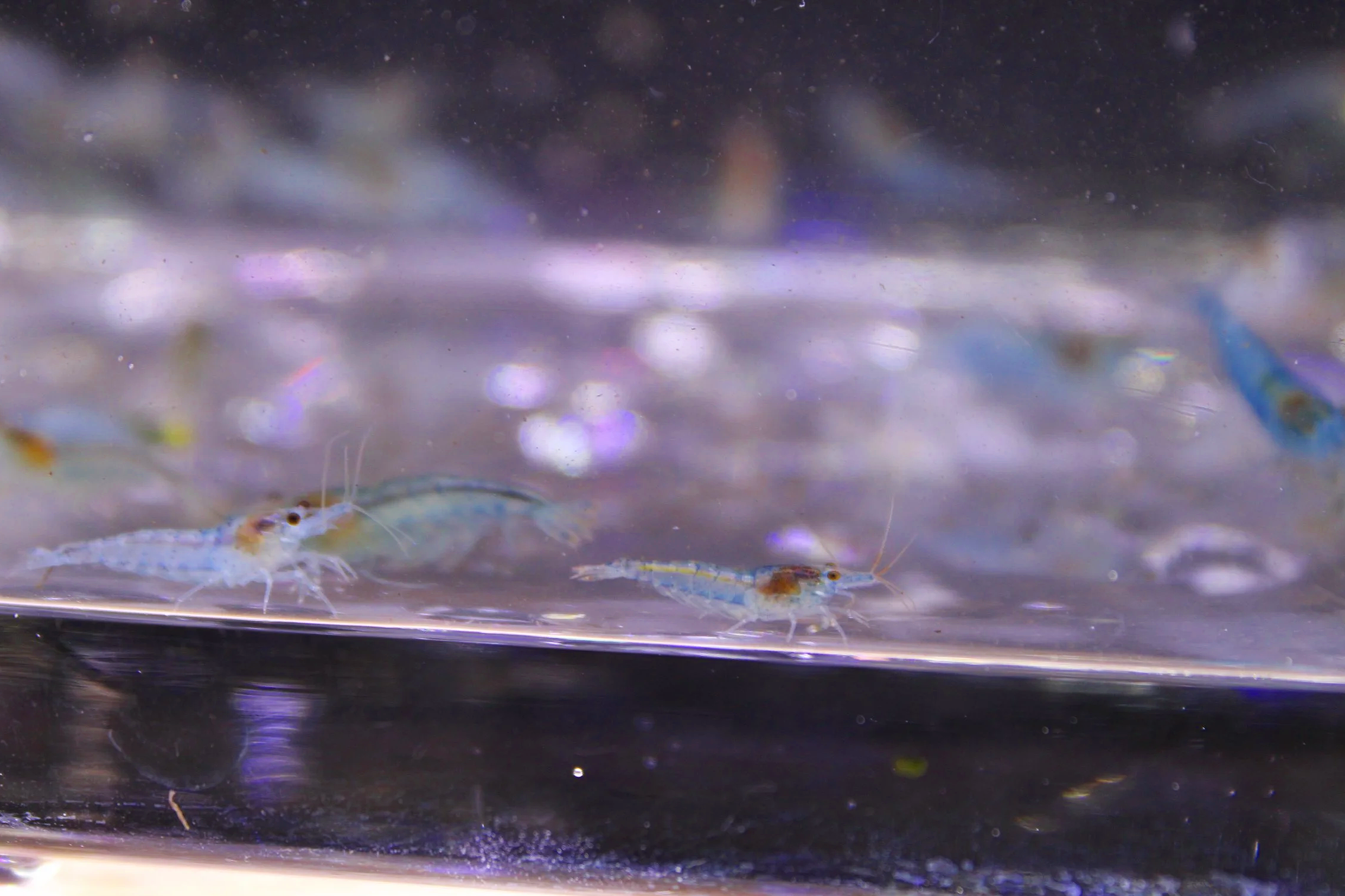
The Blue Jelly Shrimp is a beautiful and unique Neocaridina variety known for its soft translucent blue coloration and subtle pastel appearance. Unlike darker blue shrimp, Blue Jellys display a lighter, almost icy-blue tone that stands out beautifully in planted aquariums. Hardy, peaceful, and easy to care for, they are an excellent choice for both beginner and experienced shrimp keepers looking to add a gentle splash of color to their aquarium.
Approximate Shipping Size: 0.5–0.75 inches
Appearance
Blue Jelly Shrimp feature a semi-translucent body with soft blue hues that can range from pale sky blue to slightly deeper tones depending on genetics and environment. Their delicate coloration creates a clean, elegant look that contrasts especially well against dark substrate, green plants, and driftwood. As they mature, color consistency and intensity may improve under proper conditions.
Temperament & Behavior
These shrimp are completely peaceful and spend their time actively grazing throughout the aquarium. They are social and do best in colonies, where they exhibit natural foraging behavior and remain more visible and active. Blue Jelly Shrimp contribute to the overall health of the aquarium by consuming algae, biofilm, and organic debris.
Care Requirements
Blue Jelly Shrimp are hardy and adaptable, thriving in stable freshwater aquariums with plenty of surfaces for grazing. A well-planted tank with mosses and biofilm-rich areas will help support long-term success.
Tank Size: 5 gallons minimum
Temperature: 68–78°F
pH: 6.5–7.8
Hardness: Moderate
Aquascape: Moss, plants, driftwood, biofilm surfaces
Tank Mates
Best kept in shrimp-only tanks or with small, peaceful species such as nano fish, rasboras, Corydoras, and Otocinclus. Avoid aggressive or larger fish that may prey on shrimp, especially juveniles.
Diet & Feeding
Blue Jelly Shrimp are natural grazers that feed on algae and biofilm. Supplement with high-quality shrimp pellets, algae wafers, and blanched vegetables. Occasional protein-rich foods can be offered to support growth and molting.
Quick Facts
Scientific Name: Neocaridina davidi
Common Name: Blue Jelly Shrimp
Care Level: Easy
Temperament: Peaceful
Diet: Omnivore / Grazer
Max Size: ~1–1.2 inches
Tank Level: Bottom / All levels
Breeding: Easy (freshwater, no special requirements)
Amano Shrimp – Top-Tier Algae Eaters for Planted Aquariums
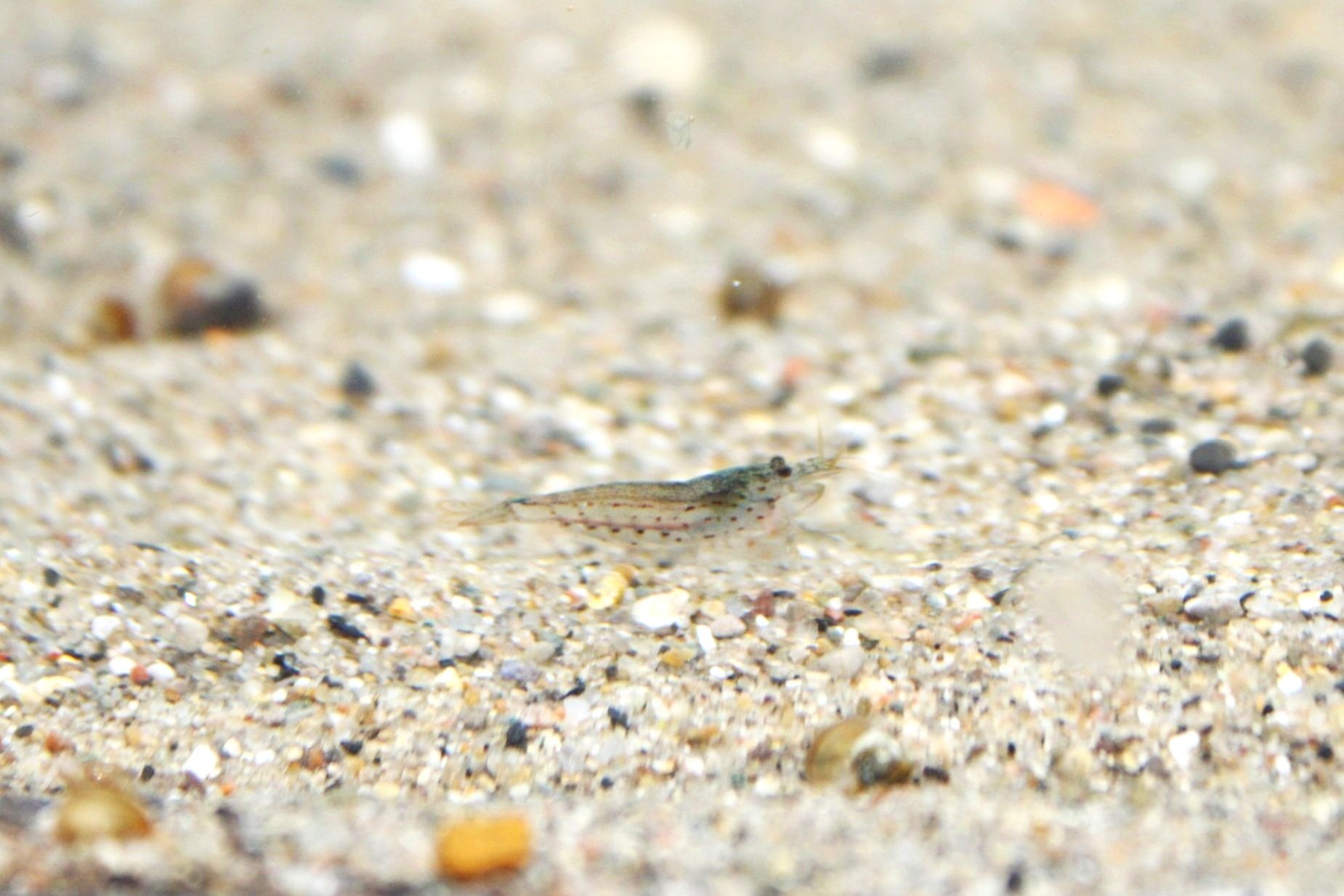
The Amano Shrimp (Caridina multidentata), also known as the Yamato Shrimp or Japanese Algae-Eating Shrimp, is one of the most efficient and sought-after freshwater cleanup crew members in the aquarium hobby. Renowned for their relentless appetite for algae and detritus, Amanos are a staple in aquascaped and planted tanks worldwide.
They feature a translucent body with light brown or gray tones and a row of dotted markings along their sides. Though not as colorful as other shrimp, their utility, peaceful nature, and subtle beauty more than make up for it. Amano Shrimp are hardy, long-lived, and thrive in established tanks with stable water conditions.
Key Features
Scientific Name: Caridina multidentata
Common Names: Amano Shrimp, Yamato Shrimp, Japanese Algae Shrimp
Size Shipped: ~0.5 inch
Adult Size: ~2 inches (larger than most dwarf shrimp)
Temperament: Peaceful, non-aggressive
Lifespan: 2–3 years (sometimes longer)
Swimming Level: Bottom to mid-water
Origin: Tank-raised or wild-collected (depending on availability)
Ideal Water Parameters
Temperature: 68°F – 78°F (20°C – 26°C)
pH: 6.5 – 7.5
GH: 6 – 10
KH: 2 – 6
Minimum Tank Size: 10 gallons
Setup: Planted tanks with hiding spots and driftwood
Filtration: Gentle to moderate flow; shrimp-safe
Why Choose Amano Shrimp?
✔ Best algae eaters among freshwater shrimp
✔ Hardy and beginner-friendly
✔ Ideal for aquascaped and nature-style aquariums
✔ Larger size than most dwarf shrimp = more visible
✔ Excellent tank cleaners without disturbing plants or fish
Feeding & Diet
Biofilm, algae, and leftover fish food
Algae wafers and shrimp-specific pellets
Blanched vegetables (zucchini, spinach, cucumber)
Occasional protein-rich supplements
Feed lightly every other day; avoid overfeeding
Amano Shrimp are a must-have for anyone maintaining a clean, balanced, and algae-free planted aquarium. Their hardiness, low bioload, and unmatched work ethic make them ideal companions for peaceful fish and other invertebrates.
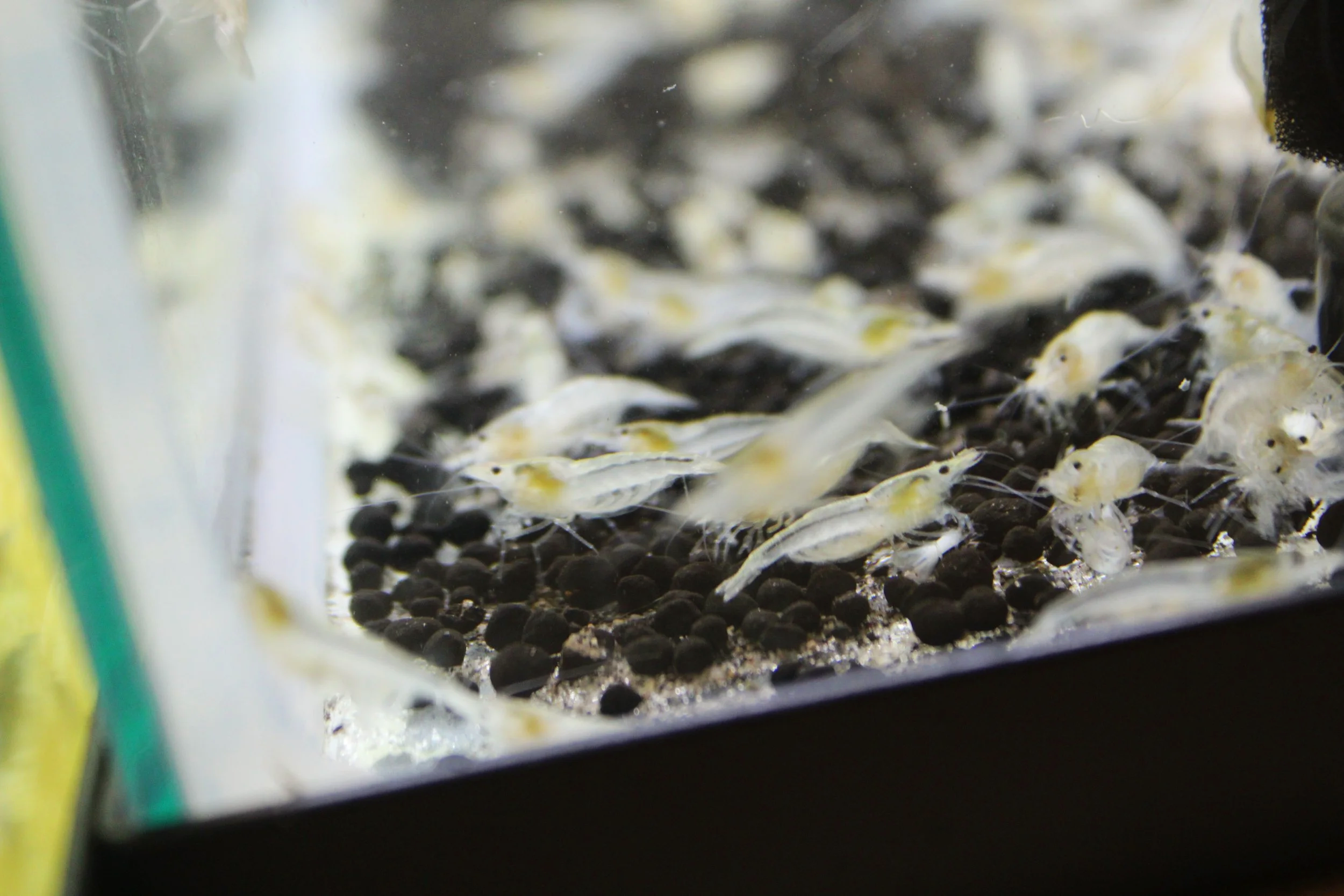
The Snowball Shrimp is a unique and elegant variety known for its soft milky-white to translucent body and distinctive white eggs that resemble tiny snowballs. Unlike more vividly colored shrimp, Snowballs offer a clean, minimalist aesthetic that contrasts beautifully against plants and dark substrates. Hardy, peaceful, and easy to breed, they are an excellent choice for both beginner and experienced shrimp keepers.
Approximate Shipping Size: 0.5–0.75 inches
Appearance
Snowball Shrimp display a pale, semi-translucent white coloration that can range from clear with a frosty sheen to more solid milky tones. Their most notable feature is the bright white eggs carried by females, which give this variety its “snowball” name. This subtle yet striking look makes them a standout addition to natural-style and planted aquariums.
Temperament & Behavior
These shrimp are completely peaceful and constantly active, spending their time grazing on surfaces throughout the aquarium. They thrive in colonies and become more confident and visible when kept in groups. Snowball Shrimp contribute to tank health by consuming algae, biofilm, and organic debris.
Care Requirements
Snowball Shrimp are hardy and adaptable, thriving in stable freshwater aquariums with plenty of biofilm and plant cover. A well-established tank with moss and grazing surfaces is ideal for long-term success.
Tank Size: 5 gallons minimum
Temperature: 68–78°F
pH: 6.5–7.8
Hardness: Moderate
Aquascape: Moss, plants, driftwood, biofilm-rich surfaces
Tank Mates
Best kept in shrimp-only tanks or with small, peaceful species such as nano fish, rasboras, Corydoras, and Otocinclus. Avoid large or aggressive fish that may prey on shrimp, especially juveniles.
Diet & Feeding
Snowball Shrimp are natural grazers that feed on algae and biofilm. Supplement their diet with high-quality shrimp pellets, algae wafers, blanched vegetables, and occasional protein-rich foods to support healthy molting and reproduction.
Quick Facts
Common Name: Snowball Shrimp
Care Level: Easy
Temperament: Peaceful
Diet: Omnivore / Grazer
Max Size: ~1–1.2 inches
Tank Level: Bottom / All levels
Breeding: Easy (freshwater, no special requirements)
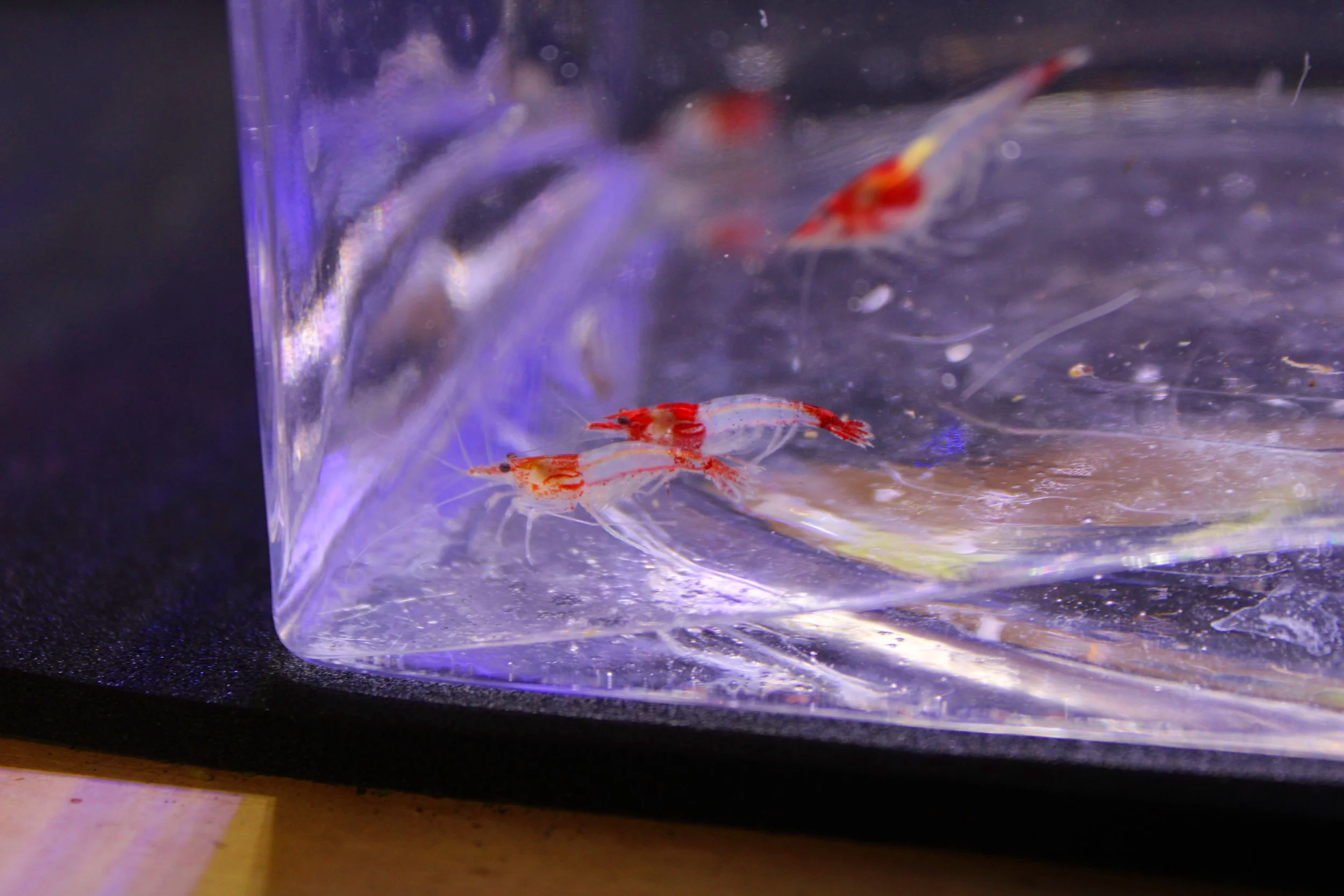
The Red Rili Shrimp is a striking and popular Neocaridina variety known for its unique translucent body paired with bold red head and tail coloration. This eye-catching pattern creates a high-contrast look that stands out beautifully in planted aquariums. Hardy, peaceful, and beginner-friendly, Red Rili Shrimp are an excellent choice for aquarists looking to build an active, colorful shrimp colony.
Approximate Shipping Size: 0.5–0.75 inches
Appearance
Red Rili Shrimp feature a distinctive pattern with solid red coloration on the head and tail sections, while the mid-body remains partially or fully transparent. This “rili” pattern creates a clean, segmented appearance that contrasts strongly against plants and substrate. Pattern intensity and coverage can vary slightly, adding individuality to each shrimp.
Temperament & Behavior
These shrimp are completely peaceful and spend their time actively grazing on surfaces throughout the aquarium. They are highly social and thrive in colonies, where they exhibit natural foraging behavior and remain more visible. Red Rili Shrimp help maintain tank cleanliness by consuming algae, biofilm, and organic debris.
Care Requirements
Red Rili Shrimp are hardy and adaptable, making them ideal for a wide range of freshwater aquariums. A stable tank with plenty of plants, moss, and biofilm will support healthy growth and breeding.
Tank Size: 5 gallons minimum
Temperature: 68–78°F
pH: 6.5–7.8
Hardness: Moderate
Aquascape: Moss, plants, driftwood, biofilm-rich surfaces
Tank Mates
Best kept in shrimp-only setups or with small, peaceful species such as nano fish, rasboras, Corydoras, and Otocinclus. Avoid large or aggressive fish that may prey on shrimp, especially juveniles.
Diet & Feeding
Red Rili Shrimp are natural grazers that feed on algae and biofilm. Supplement their diet with high-quality shrimp pellets, algae wafers, blanched vegetables, and occasional protein-rich foods to support molting and overall health.
Quick Facts
Scientific Name: Neocaridina davidi
Common Name: Red Rili Shrimp
Care Level: Easy
Temperament: Peaceful
Diet: Omnivore / Grazer
Max Size: ~1–1.2 inches
Tank Level: Bottom / All levels
Breeding: Easy (freshwater, no special requirements)
A Little About Our Livestock And Services!
USA Bred
We make it a priority to breed fish when we can and buy from local breeders some of our fish and many of our shrimp are bred by us personally.
100% Live Arrival Guaranteed!
We offer a 100% live arrival guarantee on all of our fish plants and shrimp. You simply email us a photo within 3 hours of delivery, and we take care of the rest!
Ethically Sourced
We source many of our fish from the highest quality fish farms and wholesalers almost all of our fish are tank-bred and raised. We also do a minimum 1 week quarantine of all fish except for fish bred by us.
Red Tiger Comet Platy